The current line-up is Ministral 3, released on 2 December 2025 (version v25.12) in three sizes: 14B, 8B and 3B. All three are under the Apache 2.0 licence, offer 256K of context, and understand images.
This is not an update, it is a change of generation. The Ministral 3B and 8B of 2024 (v24.10), which the previous version of this page described, were deprecated on 2 December 2025 and retired on 31 December 2025. Their official replacements are Ministral 3 3B and Ministral 3 8B respectively.
A third model joins the family sideways: Mistral Nemo 12B, retired on 31 July 2026, also has Ministral 3 8B as its designated successor. The small model of 2026 replaces the mid-size model of 2024, that is two years of progress in one sentence.
Ministral: AI That Fits in Your Pocket
Everyone's talking about bigger and bigger models. Ministral takes the opposite path: models small enough to run locally, on lightweight hardware, without an internet connection.
The Ministral 3 family (14B, 8B, 3B parameters) is built for edge computing (computation at the network's periphery): NVIDIA Jetson devices, PCs and laptops with RTX cards, and the NVIDIA DGX Spark desktop workstation. This is embedded AI, not cloud AI.
Why Edge Computing?
The cloud isn't always an option. Four situations make local deployment essential:
Critical latency: an autonomous vehicle waiting 500ms for a cloud response is an accident waiting to happen. An industrial robot that depends on the internet to make a decision means a halted production line. AI needs to be local, as close to the action as possible.
Absolute confidentiality: some data must never leave the local network. Medical data, trade secrets, classified information: with an embedded model, nothing goes through the internet. Confidentiality is guaranteed by design.
No connectivity: the factory in a rural area has no fiber. The ship at sea has no 5G. The mining site in a remote area has no Wi-Fi. Embedded AI works offline, period.
Economy at scale: deploying AI via the cloud on 10,000 devices costs millions per year in API subscriptions. With embedded deployment, you buy the hardware once, and operational costs are nearly zero after amortization.
Embedded AI is a booming market: industrial robots, autonomous vehicles, connected factories, IoT (Internet of Things) devices, smartphones. Ministral is positioned to meet this growing demand.
The story in two generations
It is worth keeping both stages in mind, because together they show where embedded AI now stands.
October 2024, the first Ministrals. Mistral releases two models, 3B and 8B, billed as "les ministraux." They are text models, designed to sit on a device. They hold up for two years, then are deprecated on 2 December 2025 and retired on 31 December 2025.
December 2025, Ministral 3. On the same day as Mistral Large 3, Mistral publishes a full family of three sizes. Three changes matter:
- They see. Every size understands images, not just text. A 3-billion-parameter model that can read a screen or a photo of a part did not exist in the previous generation.
- They have 256K of context. All three sizes, including the smallest. That is a whole novel held in memory by a model that fits on a phone.
- Each comes in three variants. This is the most interesting point, and it deserves its own section.
Base, instruct, reasoning: three variants per size
For each size (3B, 8B, 14B), Mistral publishes three versions of the model, all under Apache 2.0.
- The base variant is the raw model straight out of pre-training. It is the starting point for anyone doing their own fine-tuning.
- The instruct variant is the one that follows instructions, the one you use for an assistant, an extraction task, a classifier.
- The reasoning variant takes time to think before answering: it produces an intermediate chain of reasoning, in the manner described on the Magistral page.
The result of that last one is the announcement's most striking figure: the 14B reasoning variant reaches 85% on AIME 2025, an olympiad-level mathematics competition. From a model that fits on a laptop, on problems most adults cannot solve.
Mistral makes a subtler claim than "our models are good": its instruct variants match or exceed comparable models while often producing an order of magnitude fewer tokens.
Why does that matter? Because you pay per token, and you wait per token. A model that answers correctly in three lines costs ten times less and responds ten times faster than one that says the same thing in thirty. On an embedded device, where the compute budget is fixed, that is often the deciding factor, more so than a benchmark score.
The three sizes at a glance
| Model | Context | API price (input / output) | Official positioning |
|---|---|---|---|
| Ministral 3 3B | 256K | $0.10 / $0.10 per million tokens | Smallest and most efficient, for edge deployment |
| Ministral 3 8B | 256K | $0.15 / $0.15 per million tokens | Best-in-class text and vision for its size |
| Ministral 3 14B | 256K | $0.20 / $0.20 per million tokens | Performance comparable to Mistral Small 3.2 24B |
All three are Apache 2.0, all three understand images, all three do function calling and structured outputs.
Note the identical input and output pricing, which is unusual: on most models, output costs two to three times input.
Ministral 3 3B: The Minimalist
3 billion parameters, this is the ultra-lightweight version. And yet it sees images and holds 256K of context.
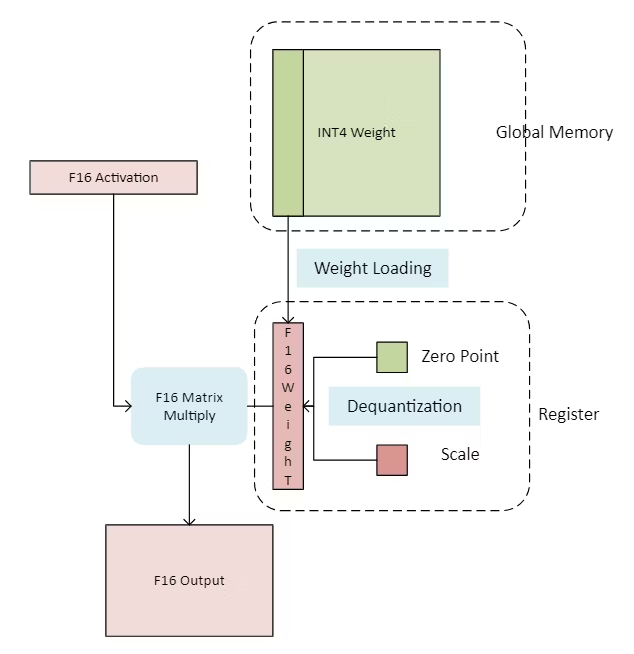
In INT4 quantization (mathematical compression of weights), a model of this size comes down to roughly 1.5 to 2 GB of memory. Enough to run it on:
- an edge device such as an NVIDIA Jetson
- a high-end smartphone
- even an older laptop
Use cases: text classification, simple entity extraction, short response generation, embedded voice assistants, reading a screen or a photo on-device. It is also the backbone of Voxtral TTS: Mistral's speech synthesis model is built on Ministral 3B.
Limitations: at equal size, a 3-billion-parameter model remains weaker than a 14-billion one on complex reasoning and long-form generation. Define the task precisely, and test.
Ministral 3 8B: The Sweet Spot
8 billion parameters, the balance between capability and lightness. Mistral describes it as offering best-in-class text and vision capabilities for its size.
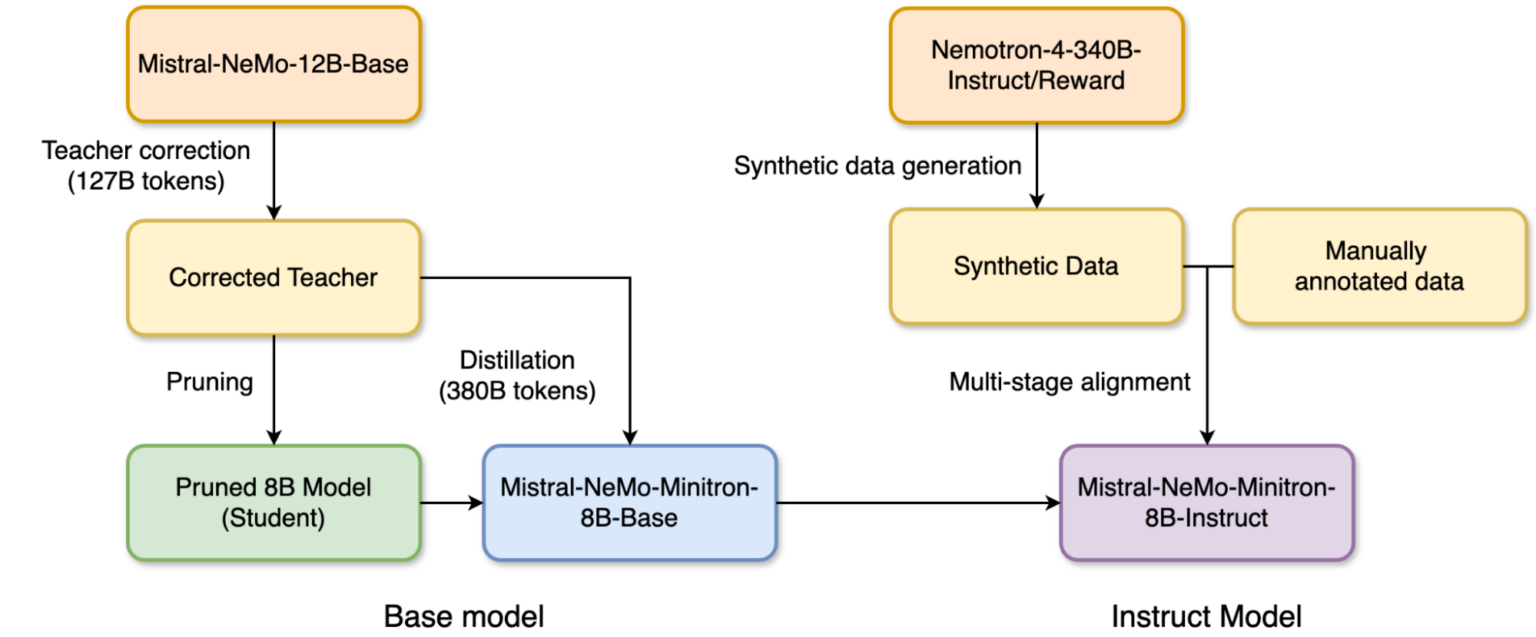
It is also the model designated to replace two ancestors: the Ministral 8B of 2024, and Mistral Nemo 12B, a model half again as large, retired on 31 July 2026.
Use cases: embedded chatbot, local document analysis, summarization, translation, writing assistance.
Being able to iterate locally, without an internet connection, without a cloud subscription, with responses in tens of milliseconds: that is what makes the 8B a natural choice for development and rapid prototyping.
Ministral 3 14B: The Upper Limit of Edge
14 billion parameters represent the upper limit of what you can reasonably deploy on high-end edge hardware.
Mistral places it precisely: its performance is comparable to that of Mistral Small 3.2 24B, a model nearly twice as large from the previous generation. That kind of catch-up is what makes the edge line-up interesting, yesterday's cloud fits inside today's machine.
Use cases: on-premise deployments for businesses, lightweight inference servers, AI workstations for technical teams.
Dense Architecture: A Deliberate Choice
Ministral 3 models are dense: all parameters participate in every generated token. No mixture of experts, unlike models such as Mixtral or Leanstral.
Why this choice?
Inference simplicity: no expert routing, no complex conditional logic. Edge hardware isn't designed to handle MoE subtleties. Simplicity guarantees reliability.
Predictability: RAM and CPU consumption is constant and predictable. No variations depending on the request, no unexpected spikes. This is crucial for embedded systems where resources are fixed.
Efficiency at small scale: below 15 billion parameters, dense models are often faster than equivalent MoE models, because the overhead of expert routing isn't offset by the gains.
Optimized for NVIDIA Hardware
Mistral works with NVIDIA (a partnership formalised on 16 March 2026) and names three families of machines on which Ministral 3 runs efficiently:
NVIDIA Jetson: the platform for embedded devices, robots and smart cameras.
RTX PCs and laptops: the consumer graphics cards already sitting in developers' machines.
NVIDIA DGX Spark: the small desktop AI workstation.
The models are also available on Hugging Face, on Mistral's own platform, and through several cloud providers including Amazon Bedrock and Azure Foundry.
Distribution Formats
| Format | Usage | Advantage |
|---|---|---|
| Hugging Face (safetensors) | Dev + fine-tuning | Complete HF ecosystem |
| GGUF | CPU/GPU via llama.cpp | Built-in quantization, portable |
| TensorRT | NVIDIA GPU | Maximum performance |
| ONNX | Multi-platform | Portability across different runtimes |
Choose the format that matches your constraint: portability (ONNX), maximum performance (TensorRT), or simplicity (GGUF).
A 3- or 8-billion-parameter model is not a frontier model. Don't expect the capabilities of Mistral Medium 3.5 on an open-ended, complex task. But for specific, well-defined edge tasks the performance is excellent, and the reasoning variant changes the picture markedly on problems that need step-by-step thinking. The key: define your task precisely and test whether the quality is sufficient.
The Economic Calculation: Edge vs Cloud
Once the hardware is purchased, the per-token cost locally approaches zero. No monthly subscription, no usage-based billing.
For massive deployments (10,000 robots in a factory, a fleet of vehicles, an entire production line), the savings compared to cloud are colossal. The initial hardware investment is recouped, after which each inference is essentially free.
Add the licence to that: Apache 2.0 across all three sizes and all three variants. No royalty, no non-compete clause, no restriction on commercial use. On this point Mistral's edge line-up is more open than its flagship, Mistral Medium 3.5 ships under a Modified MIT licence.
Key takeaways
- The current line-up is Ministral 3 (14B, 8B, 3B), released 2 December 2025 under Apache 2.0. The 2024 Ministral 3B and 8B have been retired since 31 December 2025.
- All three sizes see images and offer 256K of context, including the smallest.
- Three variants per size: base, instruct and reasoning. The 14B reasoning variant reaches 85% on AIME 2025.
- The 14B compares to Mistral Small 3.2 24B, a model nearly twice as large from the previous generation.
- The 8B also replaces Mistral Nemo 12B, retired on 31 July 2026: the small model of 2026 succeeds the mid-size model of 2024.
- Dense architecture, no mixture of experts: simpler inference and predictable resource use, which matters on embedded hardware with fixed budgets.
- Ministral 3B is also the backbone of Voxtral TTS, Mistral's speech synthesis model.
Ministral is AI that lives directly on your device: fast, economical, sovereign by design, and with no cloud dependency.