Three families, and a comparison problem
In 2026, three companies sit at the top of the vision rankings: OpenAI, Google and Anthropic. Understanding their respective strengths is what lets you pick the right tool.
But before any numbers, a warning that governs this whole page. Comparing two vision models is far harder than it looks, for three reasons:
- Each vendor picks the benchmarks it presents itself on, and does not publish the ones where it trails.
- One benchmark name often hides several variants with very different results. MMMU and MMMU-Pro are not the same test; a score from one set beside a score from the other means nothing.
- A number depends on protocol: with or without tools, with or without a reasoning step, at what "thinking budget," on which exact model version.
So this page reproduces only figures taken from the model's official announcement or its own model card, with their date and their protocol. Scores that are missing are missing because the vendor did not publish them. For the full reading grid, see how to read a benchmark score.
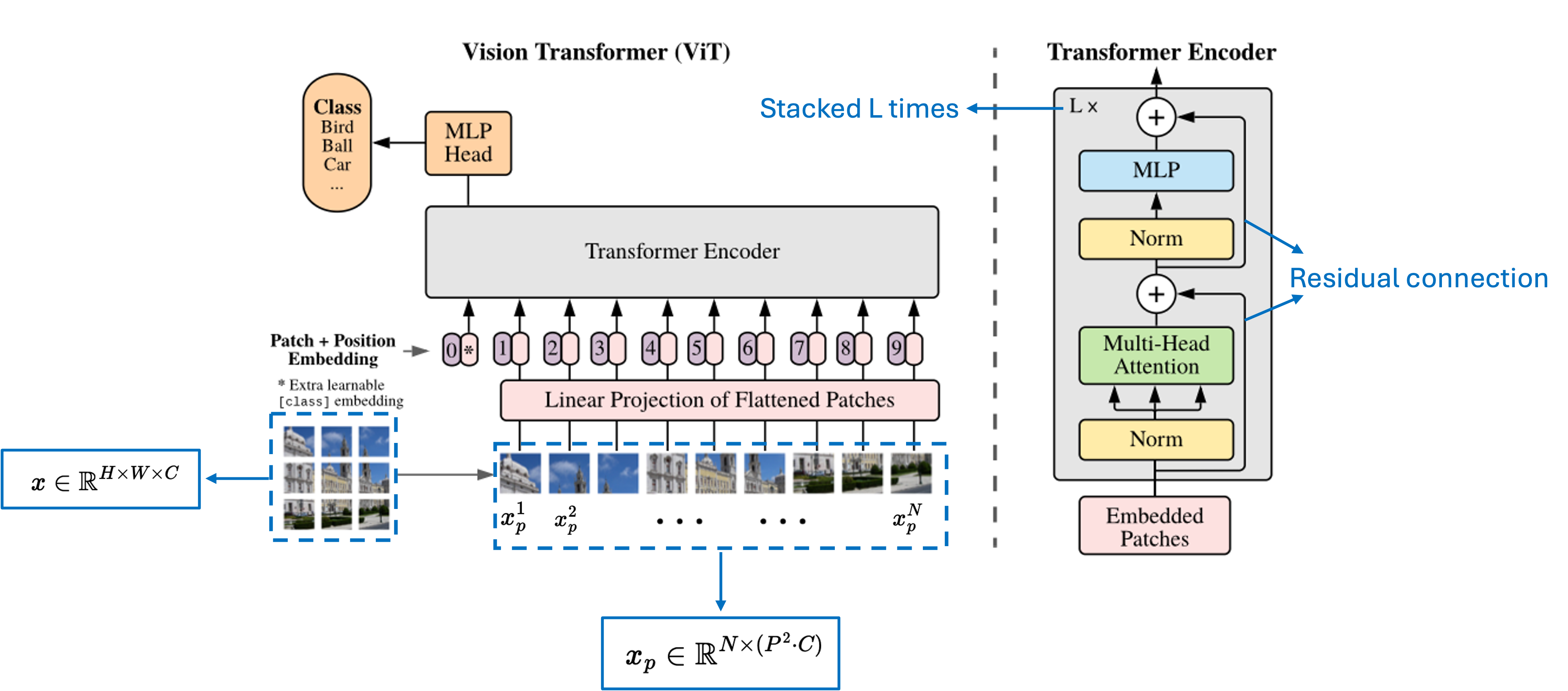
Multimodal from the start: the model is pre-trained on text, images and sometimes audio together. The modalities share the same internal representations. Bolted-on vision (GPT-4V in 2023, early Claude): vision is grafted onto an existing text model via a separate visual encoder and a projection module, the mechanism described in Vision-Language Models. The from-the-start approach tends to move more smoothly between modalities; the bolted-on approach is more modular and vastly cheaper. In 2026, the frontier models are all multimodal from the start.
OpenAI
The line
- GPT-4V (November 2023): the first sighted version, vision added on top of the existing text GPT-4.
- GPT-4o (May 2024): the "o" is for omni, text, image and audio in a single natively multimodal model.
- GPT-5 (2025): the earlier lines unified into one model with reasoning built in.
- GPT-5.4 (5 March 2026): the flagship, 1-million-token context window. Mini and Nano variants shipped 17 March 2026 for cost-sensitive use.
The published numbers
The official GPT-5.4 announcement highlights two results that bear on vision:
- MMMU-Pro: 81.2%, against 79.5% for GPT-5.2. MMMU-Pro is the hardened variant of MMMU (Massive Multi-discipline Multimodal Understanding): university-level questions whose answers require reading a figure. Stated protocol: without tool use.
- OSWorld-Verified: 75.0%, against 47.3% for GPT-5.2, and 72.4% for the human reference operator on the same task set. OSWorld measures driving a real desktop environment: clicking, typing, navigating applications from screenshots.
The second number is the more telling one about where vision is heading: the task is no longer to describe an image, but to act on it.
Observed strengths
- Busy scenes: holds up on images with many interacting elements, such as a dense technical drawing.
- Visual reasoning: the reasoning built into this line helps with deductions from visual cues.
- Reading text in images (Optical Character Recognition, OCR): reliable on small or partly occluded print.
- 1-million-token context: many images in one request, but remember that one image consumes hundreds of tokens, see Vision-Language Models.
Limits
- Object counting remains weak, here as everywhere.
- Closed architecture: no detail on model size, visual encoder, or patch size.
The line
- Gemini Pro Vision (December 2023): Google's first vision model after PaLM.
- Gemini 1.5 Pro (April 2024): 1-million-token context window, extended to 2 million in limited access; native video understanding.
- Gemini 2.0 (2025): stronger agentic capabilities.
- Gemini 3.1 Pro (February 2026): context window up to 1 million input tokens, 64,000 output tokens.
The published numbers
Gemini 3.1 Pro's official model card gives:
- MMMU-Pro: 80.5%, the same benchmark as OpenAI's 81.2% above, but measured by a different vendor, on its own hardware, with its own settings.
- MRCR v2, 8-needle variant (Multi-Round Coreference Resolution, a task about retrieving information buried in a very long context): 84.9% at 128,000 tokens of context, but 26.3% at 1 million tokens.
Look at that last pair: 84.9% at 128,000 tokens, 26.3% at 1 million. The vendor publishes both. The lesson is direct: "1-million-token context window" describes what the model accepts as input, not what it reliably finds inside. Any argument (commercial or in a claim) that leans on window size without citing retrieval accuracy at that size omits the part that matters.
Published pricing
The official Application Programming Interface (API) documentation shows two-tier pricing, and the tiering is the point: $2 per million input tokens for requests up to 200,000 tokens, $4 beyond; on output, $12 then $18 per million, thinking tokens included. In other words, the price doubles exactly when you start using the long context.
Observed strengths
- Very long context: in practice, an hour of video in a single request.
- Native video: the model processes a run of successive frames, detects motion, tracks an object over time; this is not isolated-image analysis.
- Multilingual: solid on documents in non-Latin scripts.
- Integration across Google's products.
Limits
- Uneven performance from one benchmark to another.
- Stricter filtering than competitors on some visual content.
Anthropic
The line
- Claude 3 (March 2024): vision introduced into the Claude family.
- Claude 3.5 Sonnet (June 2024): a clear step up in vision.
- Claude 4 (2025): more precise vision, better reasoning.
- Claude Opus 4.6 / Sonnet 4.6 (February 2026): 1-million-token context window, in beta.
What the official announcement publishes, and what it does not
This is the point worth carrying well beyond this page: the official Claude Opus 4.6 announcement reports no score on any vision benchmark. No MMMU, no MMMU-Pro, no DocVQA, no ChartQA. The highlighted results cover coding, agentic tasks, multidisciplinary reasoning and long-context retrieval.
Comparison tables circulate that nonetheless assign this model an MMMU-Pro score. We do not repeat it: it does not appear in the vendor's documentation, so we know neither who measured it nor how.
One figure is published and is interesting by contrast with Google: MRCR v2, 8-needle variant at 1 million tokens: 76% (against 18.5% for Claude Sonnet 4.5). Same benchmark name, same needle count, same length as Gemini's 26.3% above, but two measurements taken by two different vendors, each on its own hardware. That is the most comparability you get between official announcements, and it is still not a controlled comparison.
Observed strengths
- Documents: complex PDFs, nested tables, financial statements, invoices. This is the ground where these models are most often chosen in practice.
- Methodical analysis: good at organizing what it extracts from an image ("list the anomalies in this chart by severity").
- Computer use: reading a screen, clicking, navigating an application. No longer an exclusive capability: OpenAI publishes an OSWorld-Verified score on exactly this task.
- Caution: a deliberate tendency to flag uncertainty rather than invent a visual detail.
Limits
- No image generation.
- No video: still images only, possibly several in a row.
The only table one can honestly build
| Benchmark | GPT-5.4 (OpenAI, Mar 2026) | Gemini 3.1 Pro (Google, Feb 2026) | Claude Opus 4.6 (Anthropic, Feb 2026) |
|---|---|---|---|
| MMMU-Pro, no tools | 81.2% | 80.5% | not published by the vendor |
| OSWorld-Verified (computer use) | 75.0% | not published | not in the announcement |
| MRCR v2, 8 needles, at 1M tokens | not published | 26.3% | 76% |
| Announced context window | 1M tokens | 1M tokens | 1M tokens (beta) |
Every figure is self-reported by its vendor, in its own announcement or model card, on its own hardware. Empty cells do not mean "worse": they mean "not publicly measured." And a 0.7-point gap between 81.2% and 80.5%, measured by two different organizations, supports no conclusion at all.
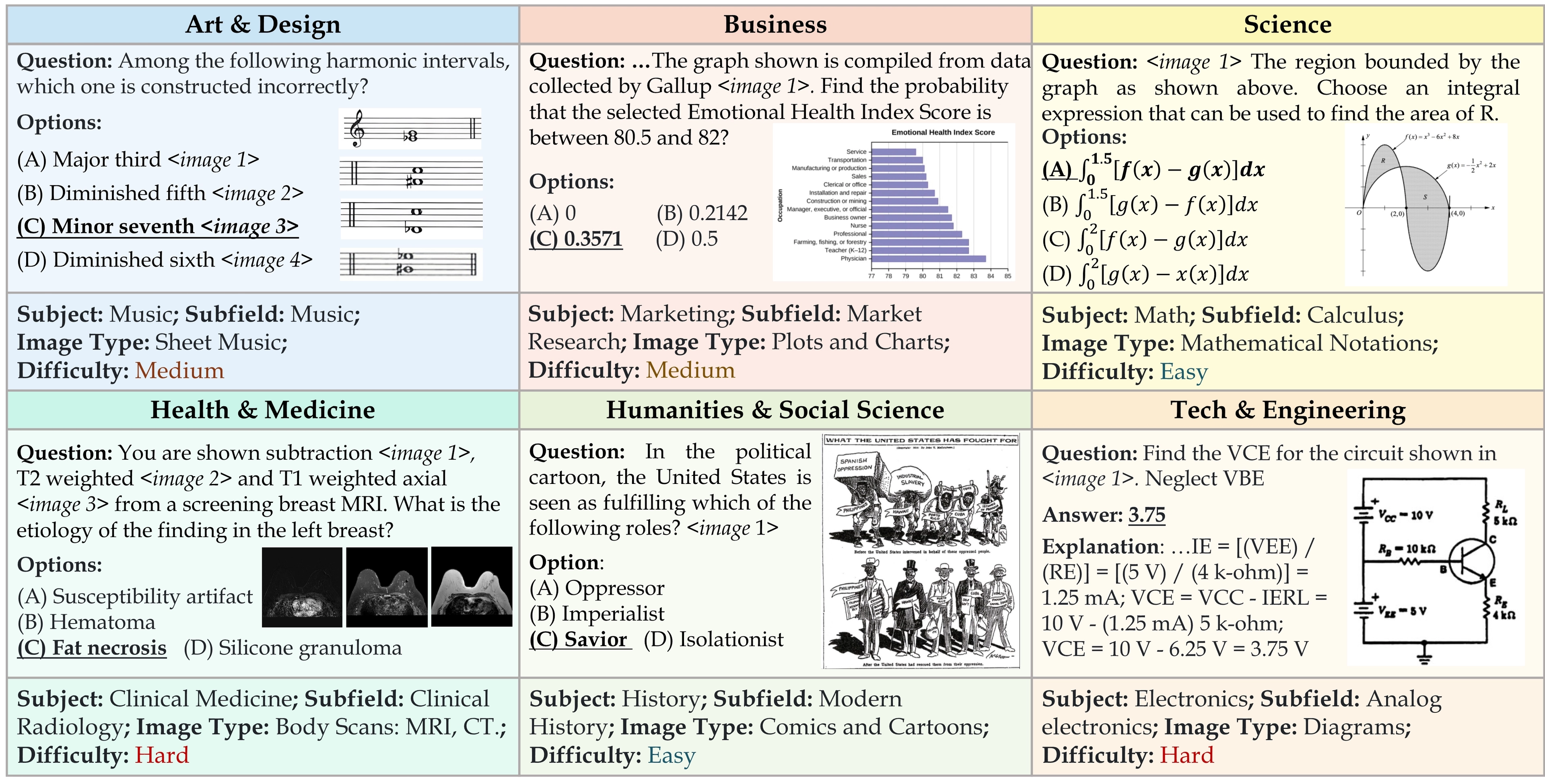
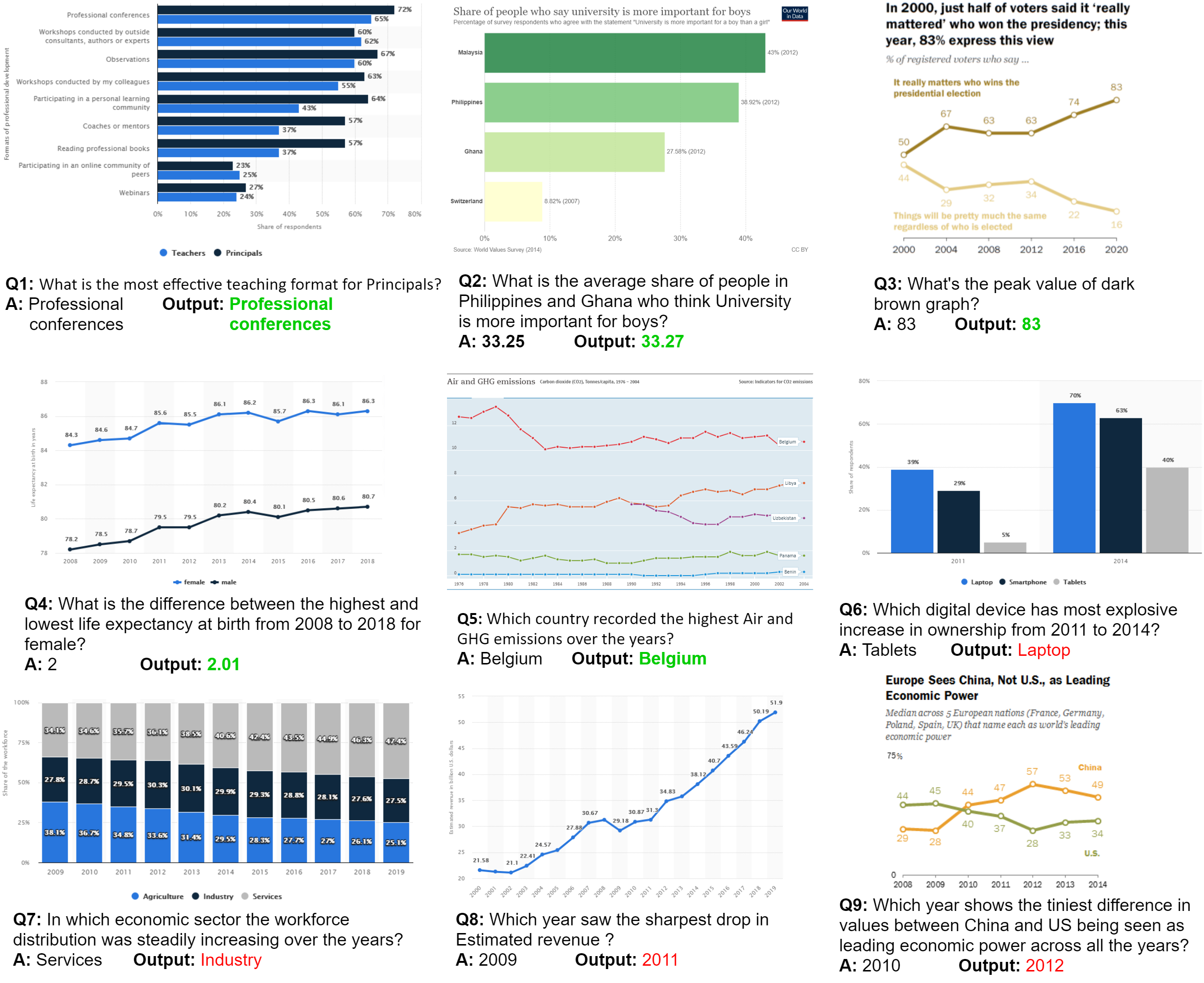
A score on MMMU-Pro or DocVQA is an indicator, not a prediction. A model two points down on an academic benchmark can be clearly better on your invoices or your technical drawings, whose distribution has nothing to do with the benchmark's. The remedy is cheap: assemble fifty examples representative of your real case, with the right answer written out by hand, and measure. That small in-house test set tells you more than any public leaderboard.
How to choose
Documents, tables, financial statements? Claude models are, in practice, the most common pick here, but run your own test, since the vendor publishes no figure on these tasks. Long video, or many images per request? Gemini, for its native video and its entry-tier price, while checking retrieval accuracy at the length you actually care about. Driving a graphical interface? GPT-5.4 is the only one of the three publishing an OSWorld-Verified score. General purpose? All three are within the margin of error. Tight budget? The light variants (Mini, Nano, Flash) cost a fraction, at the price of losing fine detail.
Open source catching up
The gap between closed and open models has narrowed:
- InternVL: competitive on several public benchmarks, with its own visual encoder.
- Qwen-VL: particularly strong on document analysis.
- LLaVA-NeXT: the academic reference, with its tile-based handling of high resolution.
- Pixtral: Mistral's model, with a visual encoder trained from scratch to accept images at their native resolution, see Pixtral.
A raw-capability gap persists on the hardest cases, but it is now measured in months rather than generations. Two structural differences remain, and they often weigh more than a few benchmark points: an open model runs on your own machines, which settles the confidentiality question for the documents you process, and it is inspectable, so you can find out its patch size, which encoder it uses, and how many tokens your image will actually cost.
1. A vendor advertises a « 1-million-token context window ». What should you check before relying on that phrase in an argument?
2. The Claude Opus 4.6 announcement publishes no vision score, yet comparison tables circulate assigning it an MMMU-Pro number. What should you make of that?
3. GPT-5.4 posts 81.2% on MMMU-Pro, Gemini 3.1 Pro posts 80.5%. What can you conclude?
4. Your company must pick a vision model to process its invoices. What approach does the page recommend?