The Merger: Uniting Two Rival Cultures
April 2023. Google makes a major strategic decision: merge its two rival AI divisions into a single entity.
Google Brain (founded in 2011): applied AI. This is the team that invented the Transformer (2017), created TensorFlow, and formalized scaling laws. The team that turns research into products.
DeepMind (founded in 2010 by Demis Hassabis, acquired by Google in 2014 for $500 million): pure fundamental research. AlphaGo (which beat the world champion at Go). AlphaFold (which revolutionized structural biology). AlphaZero. The team that solves problems considered impossible.
The merger, led by Demis Hassabis, creates Google DeepMind. The goal: centralize forces and compete head-on with OpenAI in the race to AGI (Artificial General Intelligence).
Brain brings products, scaling, TensorFlow, and large-scale deployment experience. DeepMind brings fundamental science, breakthroughs, and a Nobel Prize. Together, it's potentially the most powerful research force in AI. The challenge: getting two very different organizational cultures to collaborate.
Gemini: The Natively Multimodal Model
Gemini 1.0 (December 2023): Thinking Multimodal from the Start
Google's first model built natively multimodal. Unlike GPT-4 (which was trained on text first, then extended to images), Gemini processes text, images, audio, video, and code in an integrated manner from the start.
Three sizes to cover the full spectrum:
- Nano: small, optimized to run directly on phones (Pixel)
- Pro: the performance/cost balance
- Ultra: maximum power. Surpasses GPT-4 on most benchmarks at launch
Gemini 1.5 (February 2024): The Context That Changes Everything
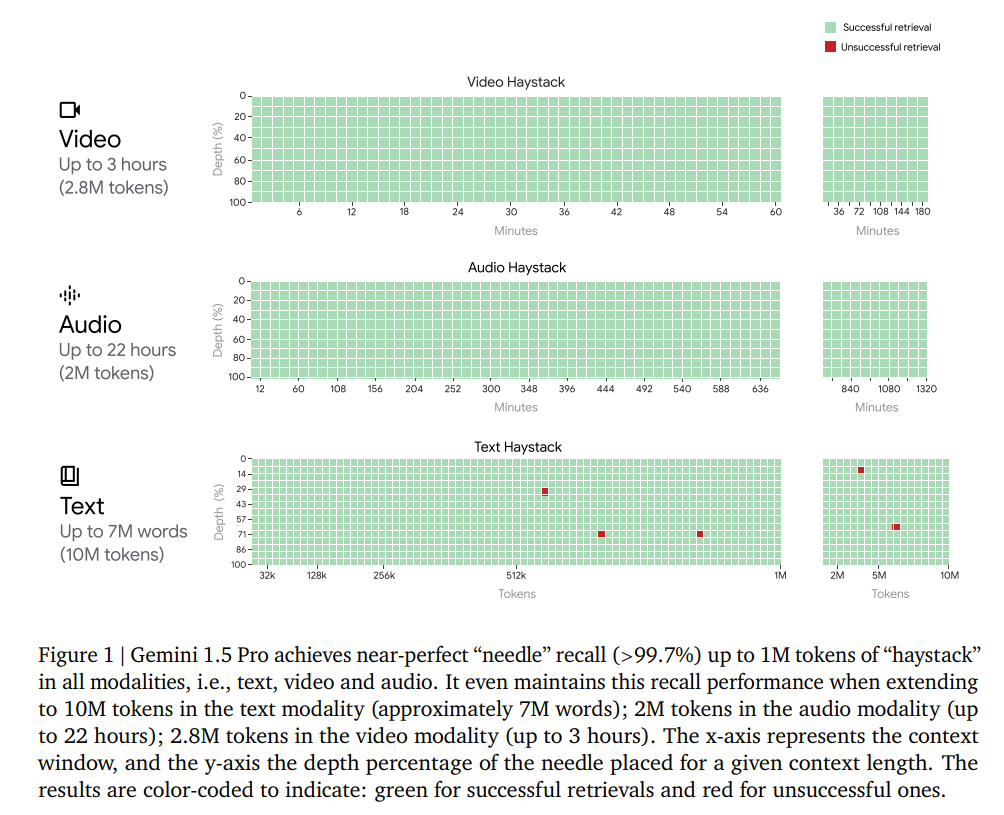
The major innovation of Gemini 1.5: the context window.
1 million tokens. That's an entire book. A complete codebase. A one-hour video. You can put the source code of a 50,000-line project and ask Gemini to explain it, find bugs, or suggest refactors. You can submit a one-hour conference video and ask for a summary of key points.
Then they pushed further: 2 million tokens in an experimental version.
The architecture uses Mixture of Experts (MoE): instead of activating all parameters for every request, the model routes to specialized "experts." More efficient for inference.
Gemini 2.0, 2.5, 3.1, 3.7, and 3.8: The Age of Agents
- Gemini 2.0 Flash: fast, with agentic capabilities. The model can use tools, browse the web, and execute actions. This is the beginning of AI agents at Google.
- Gemini 2.5 Pro: the direct challenger to o1/o3. Advanced reasoning with integrated "thinking."
- Gemini 3.1 Pro (February 2026): the current Pro model, 1M tokens, dominates 13/16 benchmarks. $2/M input tokens, the most competitive price among top-tier models (2026 update).
- Gemini 3.7 Flash (August 13, 2026): the Flash line, the fast and cheap one, now iterates every few weeks (3.5, 3.6, then 3.7 three weeks later). Google pitches 3.7 Flash as its "workhorse" for coding and agents: 65.3% on DeepSWE versus 49.0% for 3.6 Flash, a 1M token context, and an introductory price of $0.75 per million input tokens until the end of 2026. The Pro line, meanwhile, stays at 3.1: providers no longer move the whole lineup in lockstep, each tier lives its own life.
- Gemini 3.8 Flash (September 2, 2026): three weeks after 3.7, again. The gains concentrate on coding and agents (73.7% against 65.3% on DeepSWE), with a deliberate choice: the model spends more tokens on long tasks, in small steps it verifies as it goes. Same introductory price ($0.75 input, $3.75 output) until the end of 2026, then $1.50 / $7.50 from January 1, 2027: a budget pinned to the launch rate doubles on that date. Google also ships a restricted variant, 3.8 Flash Cyber, which the Chrome security team says produces 2.6 times more correct vulnerability patches than much larger commercial models: the same move as at OpenAI and Anthropic, a "cyber" version reserved for vetted players.
Google integrates Gemini everywhere: Search, Gmail, Docs, Sheets, Google Workspace, Android, Chrome, Google Cloud. That's several billion potential users. No other company can match this distribution. If Gemini doesn't win through raw model power, it can win through omnipresence. The most accessible AI is the one already in your daily tools.
Gemma: Google's Open-Source Offering
Unlike Gemini (proprietary), Gemma is Google's open-source model family:
- Gemma 2B, 7B: compact models for research and lightweight applications
- Gemma 2 (9B and 27B): impressive performance-to-cost ratio. The 27B rivals much larger models.
- Permissive license (commercial use allowed)
CodeGemma: specialized for programming, a competitor to Code Llama.
RecurrentGemma: an alternative architecture to the Transformer, based on linear recurrent models. Linear complexity (not quadratic). This might be a glimpse of the post-Transformer architecture.
PaliGemma: a vision-language model. Sees an image and talks about it, describes it, and answers visual questions.
Research: The World's Center of Gravity
Google DeepMind isn't just a language model lab. It's a scientific publication machine that touches dozens of fields.
Fundamental and Applied Sciences
- AlphaFold 2/3: protein structure prediction. Given an amino acid sequence, it predicts the 3D structure with accuracy comparable to experiments. AlphaFold 2 solved a problem that had been open for 50 years in biology. John Jumper (project lead) co-received the 2024 Nobel Prize in Chemistry. This is the first Nobel directly attributable to AI.
- GNoME: discovery of 2.2 million new stable materials through AI simulation. Massive acceleration of materials science.
- GraphCast/GenCast: AI weather forecasting. Surpasses traditional physical models (ECMWF) in accuracy and speed. 10-day forecasts in minutes instead of hours.
- AlphaGeometry/AlphaProof: mathematical reasoning at the International Mathematical Olympiad (IMO) level. The first AI system to reach silver medal level on Olympiad problems.
Games and Strategy (The DeepMind Legacy)
- AlphaGo (2016): mastery of Go, considered the most complex game for humans
- AlphaZero (2017): learns chess, Go, and shogi from scratch, without human data
- AlphaStar: Grandmaster-level StarCraft II player
Algorithmic Efficiency
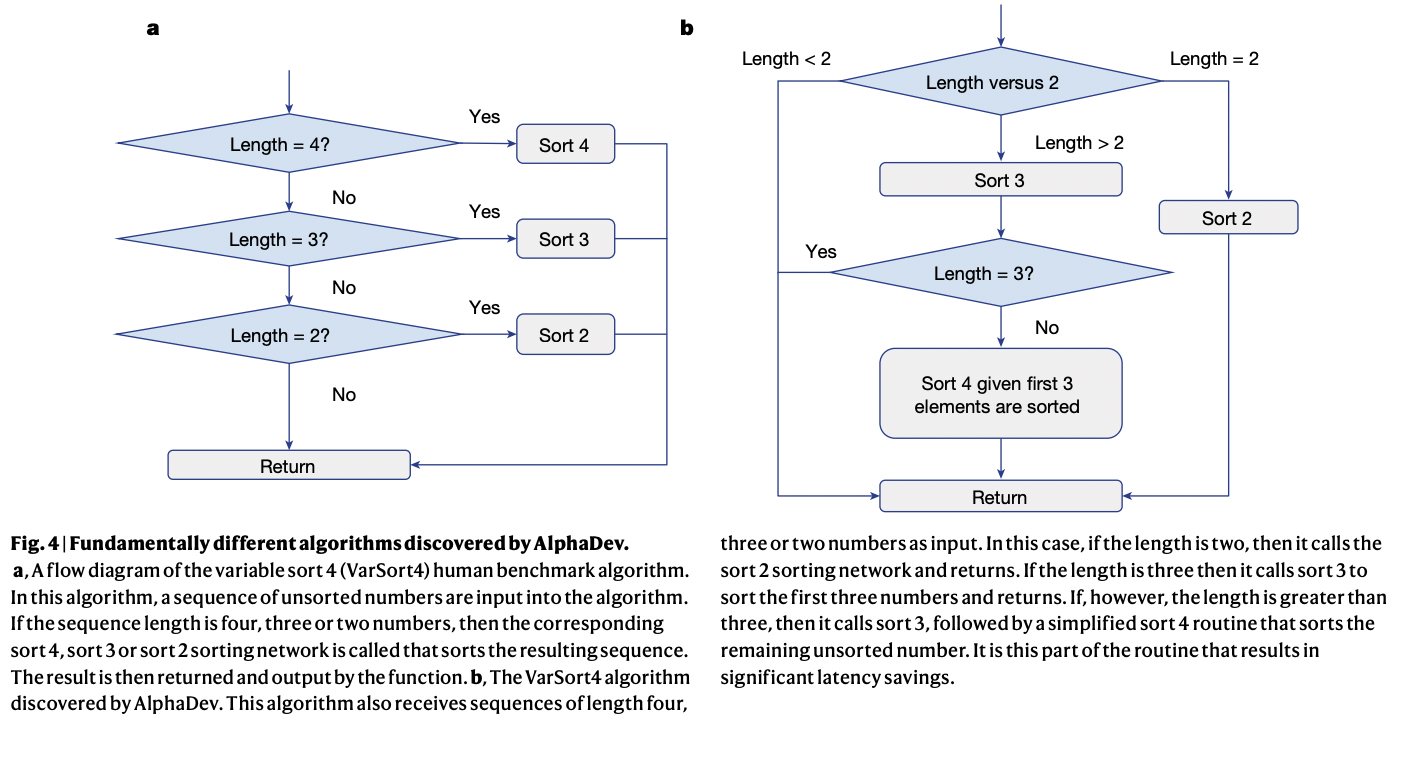
- AlphaDev: discovers better sorting algorithms than those written by humans. The discovered algorithms are integrated into LLVM (a foundational compiler used by billions of devices). This is AI that invented optimizations everyone uses without knowing it.
Safety and Governance
Google DeepMind invests seriously in safety:
- Systematic red teaming of models before deployment
- Frontier Safety Framework: risk evaluation framework for the most advanced models
- Interpretability research (understanding model decisions)
Google DeepMind publishes enormously and achieves spectacular breakthroughs. But how do you turn that into products users actually adopt? AlphaFold is revolutionary for biologists, but end users don't see it in their daily lives. Google is a massive, complex organization with slow processes. Turning a lab innovation into a deployed product takes months or years. OpenAI, smaller and more agile, ships products faster.
Infrastructure: Homegrown TPUs (Tensor Processing Units)
Google makes its own AI processors, giving it a vertical integration advantage:
- TPU v5e, v5p: specialized chips for training and inference
- Trillium (TPU v6): the next generation, with significant performance-per-watt gains
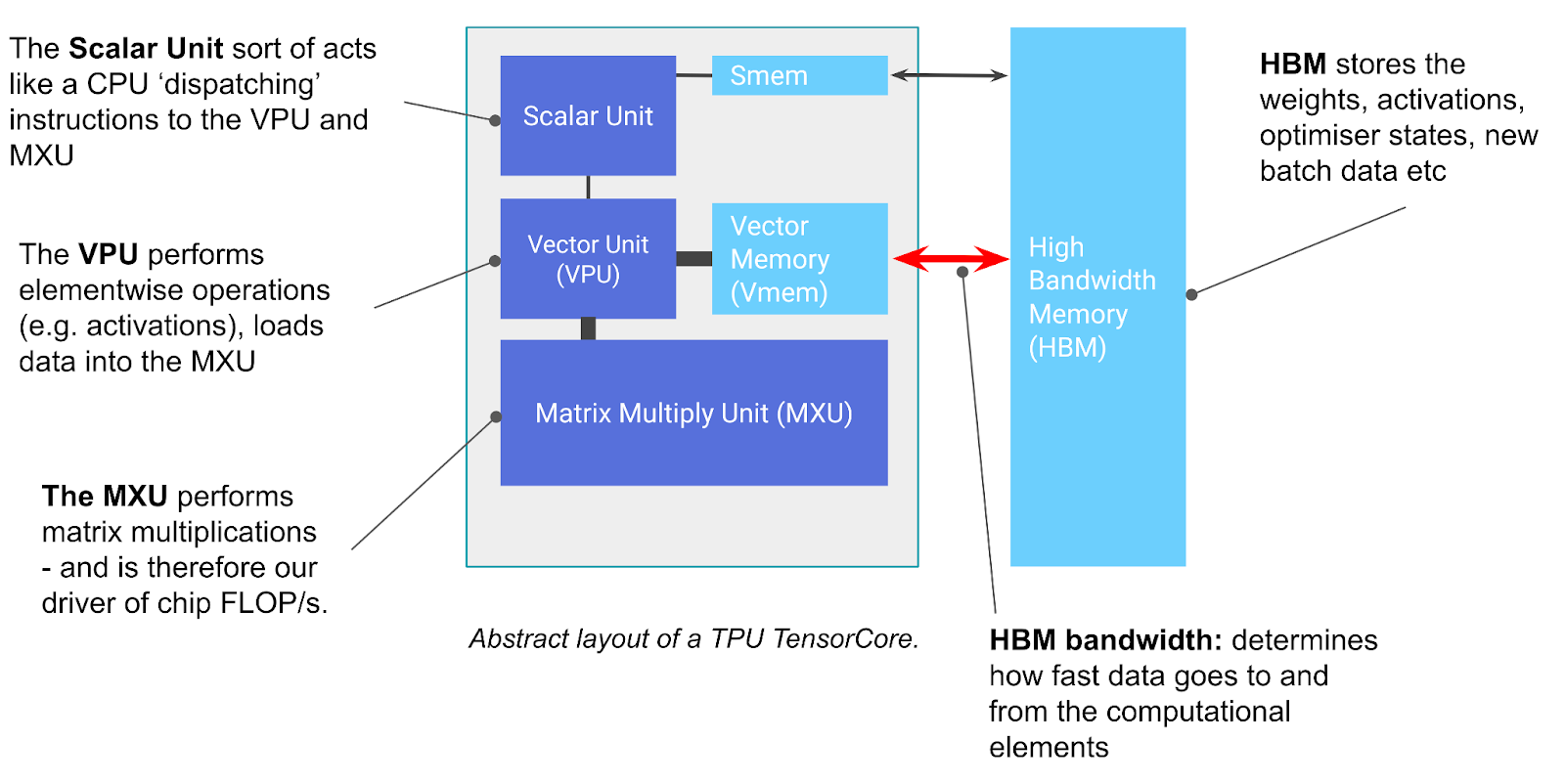
The advantage: Google isn't dependent on NVIDIA. It can optimize its hardware for its specific needs. Gemini's training costs are probably lower than those of a comparable model trained on NVIDIA GPUs.
The disadvantage: TPUs are only available through Google Cloud. This doesn't benefit the broader ecosystem.
The Google Paradox
Google has the best research in AI. The best custom chips. The largest distribution (billions of users). And yet?
ChatGPT dominates public perception. OpenAI dominates the narrative. Claude is winning with developers.
Why? Product execution.
The launch of Bard (renamed Gemini) was marred by controversial demos, public errors, and slow adoption. ChatGPT? Simple, accessible, magical from the first try.
Google DeepMind solves the greatest scientific problems in AI. But OpenAI solves the problem of putting AI in everyone's hands.
Being the best scientific lab in the world doesn't guarantee being the commercial leader. OpenAI has a product obsession. Google has a research obsession. To win the AI race (and potentially the AGI race), you need both. Google has the ingredients, but the recipe still needs perfecting.