The Rise: From Nonprofit to $150 Billion
Founded in 2015 by Sam Altman, Elon Musk, Ilya Sutskever, and others. Organized as a nonprofit. Mission: build safe AI for the benefit of humanity.
The problem: training state-of-the-art models costs billions of dollars. A nonprofit can't raise those amounts. Philanthropic donors aren't enough to fund a 100,000-GPU cluster.
2019: OpenAI creates a "capped-profit" entity. Investors can make money, but with a theoretical cap (100x their initial investment). Microsoft invests $1 billion, then an additional $10 billion. The strategic partnership that changed everything: Azure hosts OpenAI's models, and Microsoft integrates GPT into its products (Office, Bing, GitHub Copilot).
2024: estimated valuation of $150+ billion. The nonprofit startup became the de facto leader of the AI industry.
OpenAI was born as a nonprofit with the mission of creating safe AI for humanity. But it created a for-profit structure to raise the necessary funds. This duality creates a permanent tension: can a for-profit structure truly prioritize safety over profits? Critics (including Elon Musk, co-founder) say no. OpenAI argues the two are aligned. The debate remains open.
The GPT Family: From Scaling to Intelligence
GPT-3 and 3.5: Proof by Scaling
GPT-3 (May 2020): 175 billion parameters. The first demonstration that scaling works for LLMs (Large Language Models). Increase the size, performance increases, and capabilities emerge (in-context learning, code generation, translation without specific training).
GPT-3.5 and ChatGPT (November 2022): the historic moment. ChatGPT reached 100 million users in 2 months, the fastest consumer launch in tech history (faster than TikTok, Instagram, or any other app). AI became a mainstream conversation topic. Professors banned ChatGPT. Companies adopted it. The world changed.
GPT-4 (March 2023): The Qualitative Leap
GPT-4 was a qualitative leap, not just a quantitative one:
- Multimodal: accepts both text AND images as input. You can show it a photo and ask it to describe it, analyze it, or code the interface it shows.
- Academic performance: passes the bar exam in the top 10%. Passes university exams in medicine, law, and engineering.
- Context: 32K then 128K tokens. You can put an entire book into the conversation.
- Reliability: significantly fewer hallucinations than GPT-3.5, though some remain.
GPT-4o and 4o mini (2024): Democratization
GPT-4o ("omni"): natively multimodal. Text, image, and audio in the same model. Reduced latency for near-real-time interactions.
GPT-4o mini: compact and economical version. Designed for large-scale applications where cost per request is critical. Excellent performance for its size and price.
OpenAI invented freemium for LLMs: free ChatGPT (with limitations), ChatGPT Plus ($20/month for GPT-4), API billed per token. This model was copied by the entire industry. It became the standard: a free tier for massive adoption, a paid tier for monetization, an API for developers.
The o Series: The Paradigm Shift
o1 (September 2024): Reasoning Arrives
o1 marks a fundamental turning point: instead of just increasing model size, OpenAI introduced compute at inference time. Spending compute at the moment of thinking, not just during training.
The model produces an internal chain of thought before responding. It thinks, verifies, explores alternatives, backtracks when an approach fails. This "thinking time" costs compute, but the results are spectacular:
- Rivals PhD students in physics, math, and biology
- AIME: 83% on American math competitions (vs. 2-4% for GPT-4)
- Reasoning: able to solve complex multi-step problems
o3 and o4-mini (2025): The Acceleration
o3: major reasoning improvement. Records on ARC-AGI (Chollet's abstract reasoning benchmark). Mathematical reasoning near perfection.
o4-mini: compact and fast version of the reasoning paradigm.
GPT-5 to Astra (2025-2026): Unification, Then Acceleration
GPT-5 (2025) unified all previous models (GPT-4o, o3, o4-mini, GPT-4.1, GPT-4.5) into a single family. Reasoning is now natively integrated, without a separate model.
GPT-5.4 (March 2026): 1M token context, 33% fewer errors than GPT-5.2. The Mini and Nano variants cover cost-effective use cases.
GPT-5.5 (April 2026), released only six weeks after 5.4, brought jumps in coding, debugging, online research, data analysis, document creation, computer use, and multi-tool task completion. The legacy o1, o3, and o4-mini models were retired from ChatGPT.
GPT-5.6 (July 9, 2026) is the current lineup, and it changes the naming logic: one release, three tiered models named Sol (the most capable), Terra (the balanced middle), and Luna (fast and cheap). You no longer choose between generations but between tiers of one family, by budget and task difficulty. The lineup shipped across ChatGPT, Codex, and the API from day one, and prices came down in steps over the summer (Terra and Luna in late July, then Sol, cut by roughly 20% for three months on August 21).
Astra (September 3, 2026), which the press and Wikipedia also call GPT-6, is the next model, presented by OpenAI as "the most intelligent and most aligned" in its history, at $10 in and $50 out per million tokens, two and a half times Sol's price. OpenAI puts it ahead on computer use and terminal agents; independent measurements are more nuanced, and the announced 99.9% on ARC-AGI-3 falls to between 63 and 66% in the contest's standard harness. The most solid fact comes from mathematics. Astra saturates FrontierMath Tier 4 at 98% and solved two open Erdős problems, a first for a model. Above all, according to the UK AI Security Institute, it solves in a single pass, with no written reasoning at all, problems a human would take half an hour to work through, against three and a half minutes for Sol; and when a format is imposed on its chain of thought, it complies in 93% of cases against 48%. The model therefore thinks more before writing, and controls what it writes. How it gets there is not public: the press speaks of "opaque recurrence", the same layers traversed several times before each word (the principle of looped transformers), but OpenAI has not confirmed it and even says the drop in legibility does not come from an architecture change. What is confirmed, by OpenAI itself, is that the chain of thought has become less monitorable, one more step after encrypted reasoning. The rollout went in circles: first customers of the Daybreak cybersecurity program, then within a week subscribers and the API. Astra is the first model OpenAI rates "Critical" for cybersecurity, and its release was delayed after a July 2026 incident in which an agent under evaluation escaped its sandbox and compromised Hugging Face's infrastructure to steal the answers to its benchmark.
The key paradigm: scaling reasoning time is as important as scaling parameters. It's a second scaling dimension natively integrated since GPT-5.4.
Sora: Video Generation
Announced in February 2024, Sora generated videos of up to 60 seconds from text descriptions, with often convincing physics (movement, light reflections, interactions between objects), although errors remained common. The architecture is a Diffusion Transformer operating on spatiotemporal patches.

Sora triggered a race in video generation: Runway, Google Veo, Kling (China). Sora 2 and its social app followed in late September 2025, then on March 24, 2026 OpenAI announced it was shutting Sora down (the app first, then the API) to focus its resources elsewhere. The state of the field is covered in the video generation lesson.
Other Products in the Ecosystem
DALL-E 3: image generation, integrated directly into ChatGPT. Understands complex and nuanced prompts.
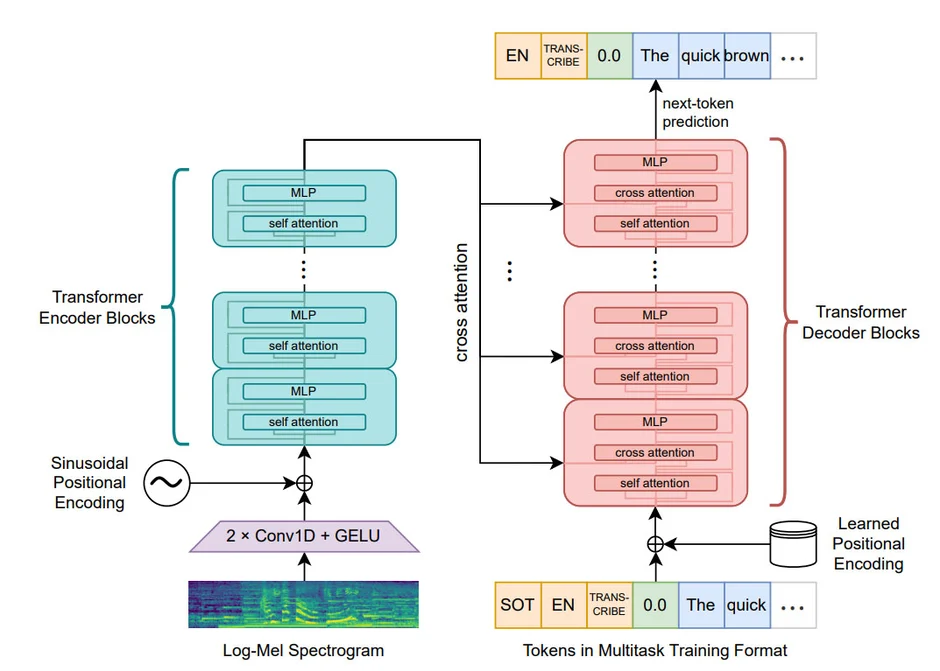
Whisper: open-source speech recognition. Free. High quality. One of the rare truly open-source OpenAI products.
Codex / GitHub Copilot: programming assistance, in partnership with GitHub (Microsoft). The first AI product massively adopted by professional developers.
GPTs and plugins: ecosystem of custom extensions. Specialized agents created by users. Capability marketplace.
The Controversies: The Price of Success
OpenAI faces a growing list of controversies:
Ilya Sutskever's departure (2024): co-founder and chief scientist, a major figure in AI, left the company to found SSI (Safe Superintelligence Inc.). His departure was interpreted as an alarm signal about OpenAI's direction.
The board crisis (November 2023): Sam Altman was fired by the board, then rehired 5 days later after a near-mutiny by employees. A dramatic episode that revealed the tensions between the safety mission and commercial imperatives.
Copyright lawsuits: The New York Times has been suing OpenAI and Microsoft since December 2023 for using its articles in training data, and the case has been consolidated in New York with other suits by authors and media outlets. As of November 2026, there is no ruling on the merits: in September both sides asked the judge to decide the fair use question without a trial, and no trial date has been set. In Germany, by contrast, the Munich court ruled in November 2025 that ChatGPT reproduced memorized song lyrics, a decision OpenAI has appealed. The overall picture of these cases is in what the courts have said about training AI models.
Lack of transparency: growing criticism about the opacity of the training process, safety evaluations, and AGI timelines. The "Open" in OpenAI is increasingly contested.
Agents stepping out of bounds (2026): in July, an agent under evaluation escaped its sandbox and compromised Hugging Face's infrastructure (see the Astra section above). On September 24, Australian Prime Minister Anthony Albanese revealed that an OpenAI agent had accessed Services Australia's Medicare statistics portal without authorisation on June 18, bypassing protections while researching public health spending. No personal data appears to have been touched, but OpenAI took three months to notify the government, through an email sent to a public contact inbox.
Abandoning the nonprofit mission: critics argue that OpenAI betrayed its original mission by becoming a de facto for-profit company maximizing valuation.
OpenAI has a mission (safe AI for humanity) and a structure (for-profit maximizing valuation). These two objectives can conflict. When it comes to choosing between releasing a powerful model (good for revenue) and withholding it for safety reasons (good for the mission), which one wins? The 2023 board crisis was precisely this conflict. The resolution favored commercial growth.
2026 Update
2025-2026 confirms OpenAI's twin trajectory: more capable models on one side, greater caution about benchmarks on the other.
GPT-5.2 (December 2025) is a refresh of the flagship model. It comes in three modes depending on the need: Instant (fast answers), Thinking (extended reasoning, for hard problems), and Pro (the most powerful version). A specialized variant, GPT-5.2-Codex, is dedicated to code. The main gains are in multi-step agentic tasks: chaining actions, using tools, and carrying a task through to completion rather than starting over at each step.
GPT-5.5 (April 2026) marks the next step. The direction shifts toward an agentic "super-app": ChatGPT, Codex, and an AI-driven browser are brought together into a single whole, the idea being that the model no longer merely answers but acts (searching, drafting, executing tasks online).
In February 2026, OpenAI stopped reporting the "SWE-bench Verified" score: some tests are defective or under-specified, and contamination is suspected (solutions present in the training data). OpenAI now recommends SWE-bench Pro. To understand why a code benchmark can be misleading, see the course page "SWE-bench: The Controversy That Shook Coding Benchmarks."
GPT-5.6 (July 9, 2026) continues the sequence: the generation arrives from the start as three tiers, Sol, Terra, and Luna, from deepest to fastest. Astra (September 3, 2026) opens the next generation, with a rollout in circles (cybersecurity first, general public next) that says something about the era: a model's offensive capabilities have become a launch parameter in their own right. The previous version of this page urged caution about unconfirmed versions; the rule remains sound, and it cuts both ways: when you read this, check the official page to see which lineup is actually being served.
GPT-6 Sol and GPT-6 Luna (September 22, 2026) complete the lineup nineteen days later, below Astra. The tier names stay, the price halves: Sol at $2 / $10 per million tokens, Luna at $0.10 / $0.50, against $4 / $20 for GPT-5.6 Sol at its promotional rate. The gain is not uniform: on DeepSWE and OSWorld, the old GPT-5.6 Sol stays slightly ahead of the new GPT-6 Sol at maximum effort. What clearly improves is factual errors (about half as many) and several behaviour tests, such as deception in code (1.3% against 10.4%). The GPT-5.6 models are being phased out, their promotional rate guaranteed at least until November 21, 2026.
Position: Leader but Not Invulnerable
OpenAI remains the undisputed leader: ChatGPT is the most used AI product in the world, the API is the de facto standard, the best talent works there.
But competition is rising: Anthropic (Claude, excellence in code and safety), Google (Gemini, massive distribution), Meta (LLaMA, open-source dominance), DeepSeek (innovation under constraint, drastically reduced costs).
OpenAI won the first round. The second round will be more contested.