The Humanoid Returns: 50 Years of Waiting, Then Suddenly Everything Accelerates
Honda's ASIMO could climb stairs in 2000. Slow, fragile, and limited to carefully prepared demonstrations. The world shrugged: "Why would you want a humanoid robot when an industrial arm does the job just fine?"
Since 2022, everything has changed. Tesla Optimus, Figure AI, 1X NEO. Billions of dollars in investment. The key idea: foundation models (vision, language, reasoning) change the terms. For the first time a robot can potentially understand an instruction in ordinary language and carry it out in an environment nobody prepared for it.
Of the whole module, this is the page where the distance between the talk and the evidence is greatest. Almost everything below comes from communications by companies raising money, not from peer-reviewed papers. Keep three questions to hand:
- Who is driving? Many demos are partly teleoperated, an operator commands the robot off camera. That is not fraud; it is the normal way to collect data. But a teleoperated demo measures no autonomy at all.
- How many attempts? A successful video is compatible with a 5% success rate. None of the videos you will see states how many tries it took.
- Pilot or contract? "Deployed at X" covers both a three-week trial and a commercial agreement. Those are not the same fact.
The general checklist is on How to read a benchmark score.
The world is designed by and for humans. Doors, stairs, tools, workstations, vehicles: everything is sized for our body shape. A humanoid robot can theoretically integrate into any existing environment without infrastructure modifications. That's a powerful economic argument. But the technical challenge is proportional to the ambition: manual dexterity and bipedal balance remain fiendishly difficult.
The Three Major Players
Tesla Optimus: Tesla carries over to the humanoid the vision stack it built for self-driving (Full Self-Driving, FSD). Cameras only, no LiDAR (laser rangefinder measuring distances). End-to-end approach, as with the car. The second generation was shown with 11-degree-of-freedom hands. The price target Elon Musk has stated is in the $20,000–$30,000 range, a declared objective, not a price anyone pays. Tesla's claimed advantage: factories able to manufacture at volume, and a vehicle fleet continuously collecting images.
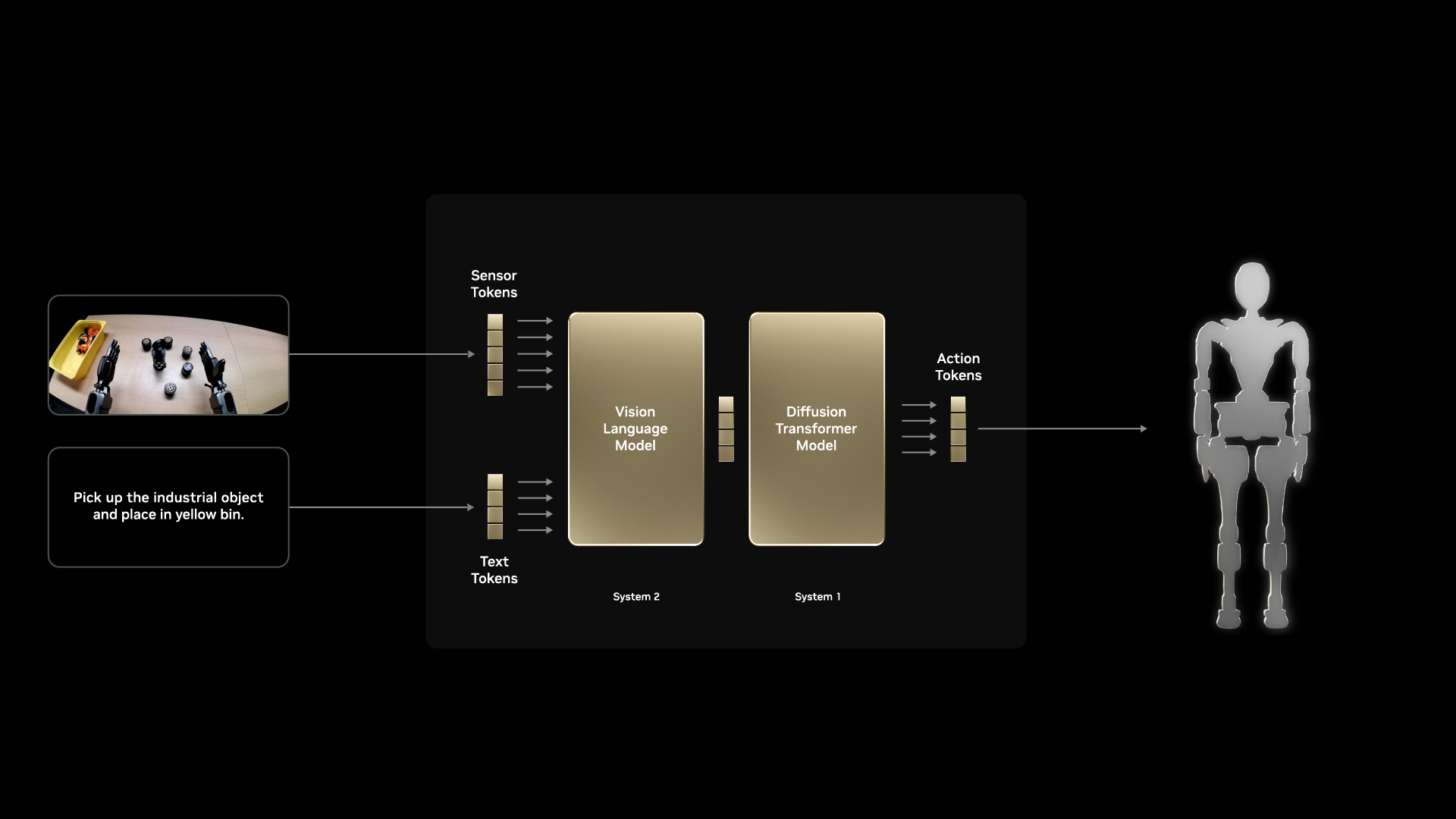
Figure AI: the most publicized startup, several billion dollars raised from Microsoft, NVIDIA and Jeff Bezos among others. A point of chronology that is often reported wrongly: Figure did have a collaboration agreement with OpenAI, but ended it in February 2025 to build its own model, Helix, on the now-classic split, a slow module that understands the scene, a fast one that emits joint commands. Figure 02, shown in August 2024, is announced at roughly 70 kg with a 2.25 kWh battery giving on the order of 5 hours of runtime. Target sectors: logistics and manufacturing.
1X Technologies: NEO is a biped aimed at the home; EVE, a wheeled robot, has been used for surveillance duties. OpenAI has invested in 1X. The approach emphasizes embodied AI (an intelligence with a body, sensors, and physical consequences) and learned world models (World models).
Other notable players: Boston Dynamics (electric Atlas, the most physically agile), Agility Robotics (Digit, in commercial deployment at the logistics provider GXO since June 2024, after a pilot at Amazon), Unitree (the G1 is announced around $16,000, while the larger H1 sits around $90,000, collapsing the two into "under $20,000" is common and wrong), Sanctuary AI (Phoenix, dexterous hands).
The format is always the same: the robot converses, identifies the objects on the table, states what it is about to do, then does it. It is genuinely impressive, and it demonstrates one precise thing: that a vision-language model can be plugged into a physical robot.
It demonstrates nothing about three others, which are worth naming: the success rate (you do not see the failed attempts), the duration (holding out for thirty seconds and holding out for eight hours are different problems), and the share of autonomy (nothing in a video distinguishes an autonomous robot from a teleoperated one). Those three unknowns are not details: they are exactly the three variables the industrial value of the system depends on.
The Typical Training Pipeline
How do you train a humanoid robot to do useful tasks? The current pipeline involves several stages:
- Teleoperation: a human remotely controls the robot with a controller, haptic gloves, or an exoskeleton. The observations (images, sensors) and actions (arm and leg movements) are recorded simultaneously
- Imitation Learning: a deep learning model learns to reproduce the human demonstrations. It observes what the human did in each situation and learns the corresponding policy
- RL in simulation: refinement of the policy in simulators like Isaac Sim or MuJoCo. In simulation, you can run millions of attempts without risking damage to the robot
- Sim-to-real: transfer of the policy to the physical robot, with domain randomization to bridge the gap between simulation and reality
- Real-world fine-tuning: continuous adaptation on the real robot to correct transfer imperfections
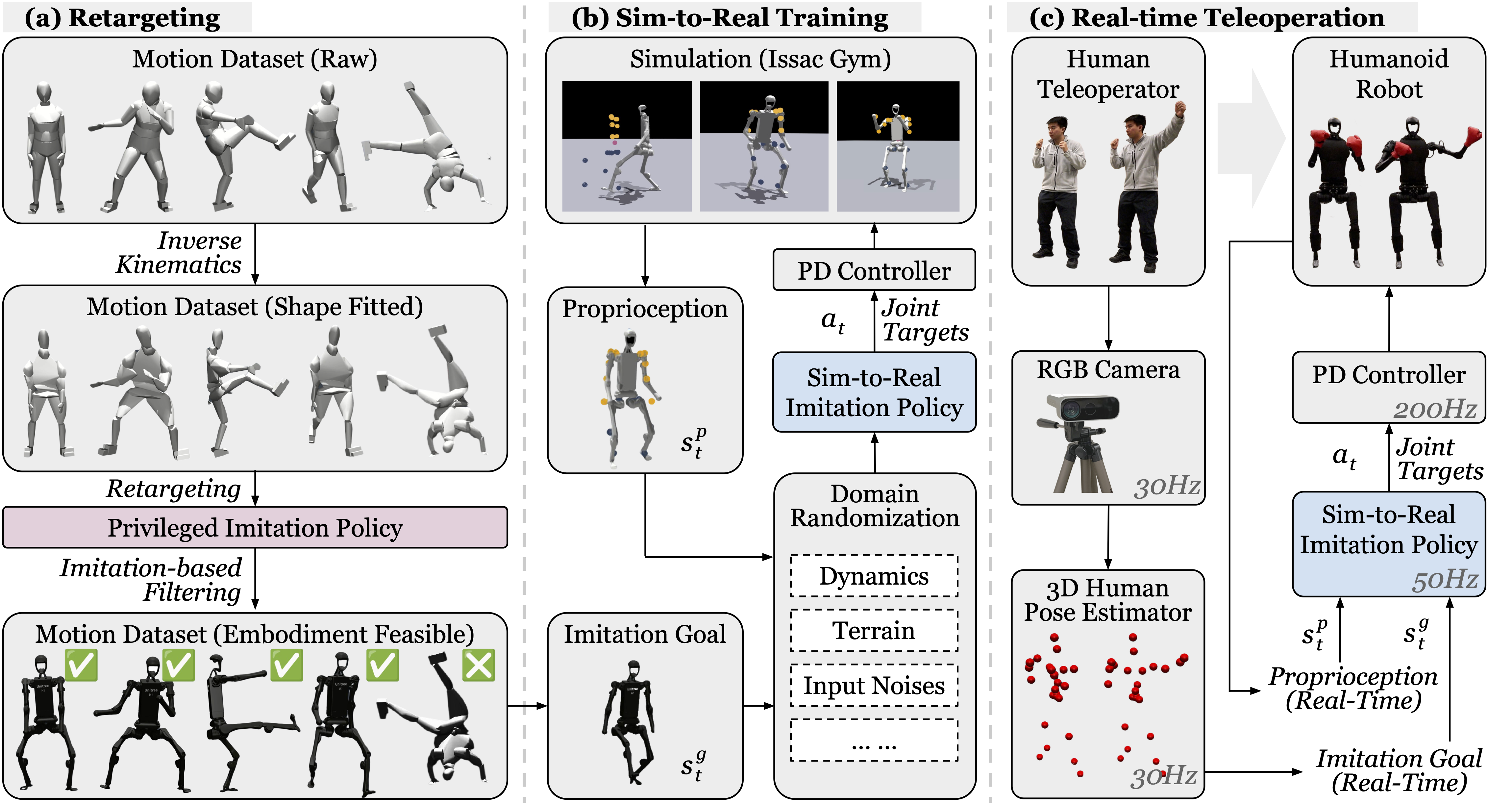
Step 4 is the one that decides everything, and it has its own page: Sim-to-real. Foundation models like NVIDIA GR00T aim to accelerate each step by providing a pre-trained base model that each manufacturer then adapts to its own robot.
Target Applications, and the Status of These Forecasts
The breakdown below is the one the industry itself uses. These are commercial roadmaps, not findings: they describe what companies hope to sell, on dates they chose.
Short term: logistics (moving bins and packages in warehouses), manufacturing (assistance on production lines), inspection and site surveillance.
Medium term: retail (in-store assistance, inventory), healthcare (assisting the elderly, carrying loads for medical staff), construction.
Long term: domestic robot (cleaning, cooking, tidying), home care, and replacing repetitive physical tasks across multiple sectors.
The ordering, though, is meaningful and not arbitrary: it runs from structured to unstructured. A warehouse has flat floors, constant lighting, standardized objects and no child running through. A home has none of that. It is a difference in kind, not degree, it is precisely the long tail of rare cases that escapes simulation (Sim-to-real).
Many videos are teleoperated, sped up, or represent the best attempt out of many. Whether a humanoid can operate reliably and autonomously for eight straight hours in an uncontrolled real environment remains an open problem. Two concrete tests: check whether the announcement gives a continuous operating duration and a success rate over a stated number of trials. Their absence is itself information.
Major Technical Challenges
Reliability: lasting eight hours or more without mechanical, software or electrical failure. The reference quantity is MTBF (mean time between failures), counted in tens of thousands of hours for an industrial arm. No humanoid maker publishes an equivalent figure, which is itself telling.
Cost: the hardware stays expensive (motors, gearboxes, sensors, dexterous hands) and it is the one line item no software progress reduces.
Safety: interacting physically with people without ever injuring them. A 70 kg machine falling on someone causes serious injury. And the problem is not only being safe but demonstrating it to a third party, which validation in simulation does not achieve.
Battery life: batteries limit usable duration and add weight, two constraints that pull against each other.
Dexterity: manipulation comparable to the human hand (some twenty degrees of freedom, tactile feedback, fine force control) remains an open problem. See Robotic manipulation.
What the Market Numbers Are Worth
Goldman Sachs Research puts the total addressable market for humanoid robots at $38 billion by 2035. Two qualifications change how that number reads. First, an addressable market estimates what could be sold if the technology worked, it is not a sales forecast. Second, the same house previously put the figure at $6 billion: the estimate was revised upward by more than sixfold. A number that moves by a factor of six mostly measures the uncertainty of whoever is quoting it.
A ten-year projection about an undeployed technology is not data; it is a quantified hypothesis. The massive investments now being made are a bet: that foundation models will solve robotic intelligence, and that hardware costs will fall far enough. Neither is settled. The bet may be a good one; that is not the same as a fact.
1. A typical industry video: the humanoid converses, identifies the objects on the table, announces its plan, then executes it. What exactly does it demonstrate?
2. Many humanoid demonstrations are partly teleoperated. How does the page characterize this practice?
3. Goldman Sachs values the humanoid market at 38 billion dollars by 2035, after an earlier estimate of 6 billion. What reading does the page propose?
4. The sector's roadmaps target the warehouse in the short term and the home in the long term. Why is that order not arbitrary?
5. A humanoid press release gives no continuous-operation duration, no success rate over a stated number of trials, and no MTBF equivalent. What should you conclude?