The Problem: Our Exams Have Become Too Easy
Picture a professor who writes a brutal final exam. Year one, almost everyone fails. Year two, a few pass. Year three, everyone gets a perfect score. At that point the exam is useless: it no longer distinguishes a good student from a brilliant one. The professor has to write a new, harder one.
That is exactly what happened to AI benchmarks. MMLU (general knowledge, 57 subjects) sits around 90% for every recent model. GSM8K (grade-school math) is above 96%. HellaSwag (common sense) tops out at 95%. We call this saturation: when all models score near 100%, the test no longer measures anything useful. Model A and model B both score 96%, there's no way to tell which is better.
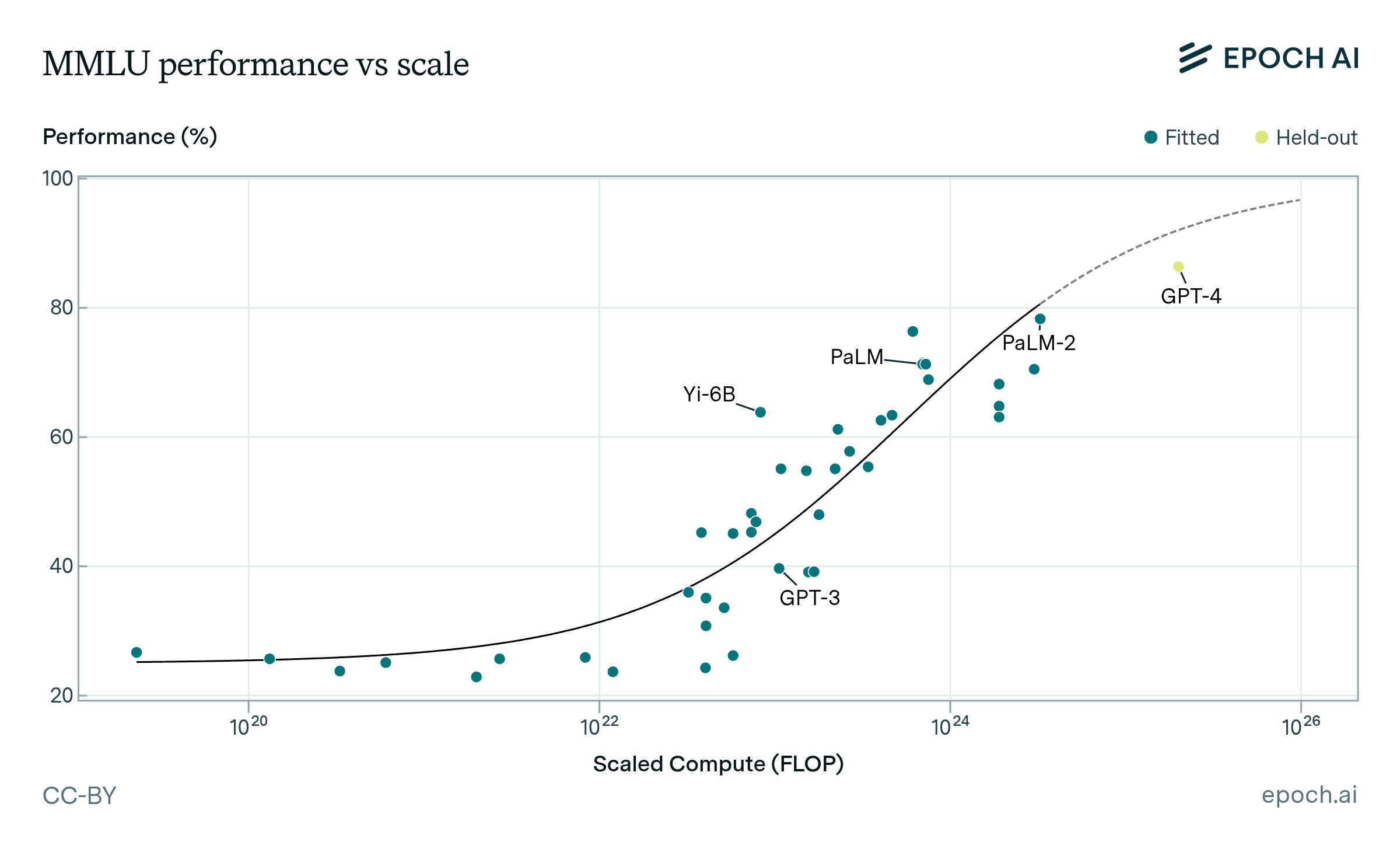
Even GPQA, designed in 2023 to be "Google-proof" and resist memorization, has been partly caught up: the best reasoning models now clear 80% on it, matching human experts.
So we needed an exam that stays hard, for a long time. That is the bet behind Humanity's Last Exam (HLE).
"Humanity's last exam." The name is deliberately provocative: this is meant to be the last academic exam one can write for models, in the sense that it pushes the difficulty of closed-answer questions all the way to the frontier of human knowledge. Once this test is saturated, you can't really raise the bar on this format anymore, you'll have to change how you evaluate.
What HLE Actually Is
HLE is a benchmark built by the Center for AI Safety and Scale AI, designed from the start to resist saturation. Its main features:
- ~2,500 questions, written by experts in their fields (researchers, professors, specialists).
- More than 100 disciplines: advanced mathematics, physics, chemistry, biology, humanities, law, linguistics, engineering… far broader than GPQA's three domains.
- Closed questions, meaning automatically verifiable answers (an exact number, a formula, a precise term, a multiple choice). No "up for debate" answers: it's either right or wrong.
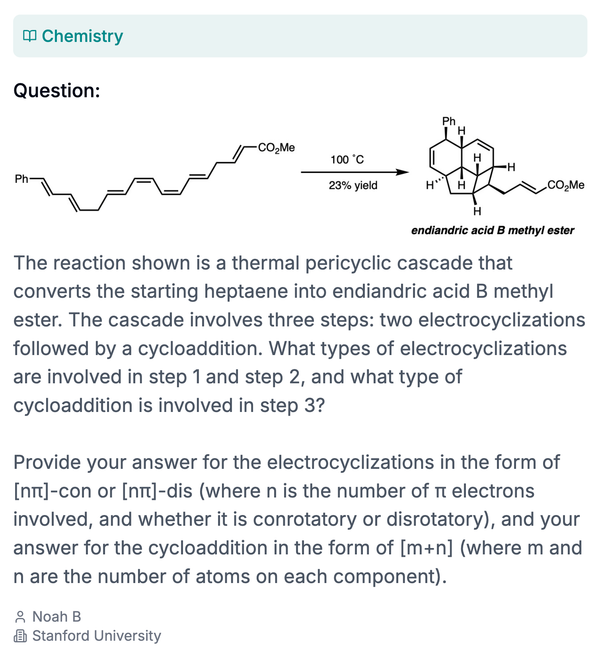
- An expert / research level: these aren't textbook questions, but problems that require combining several sharp ideas, sometimes at the edge of what is known.
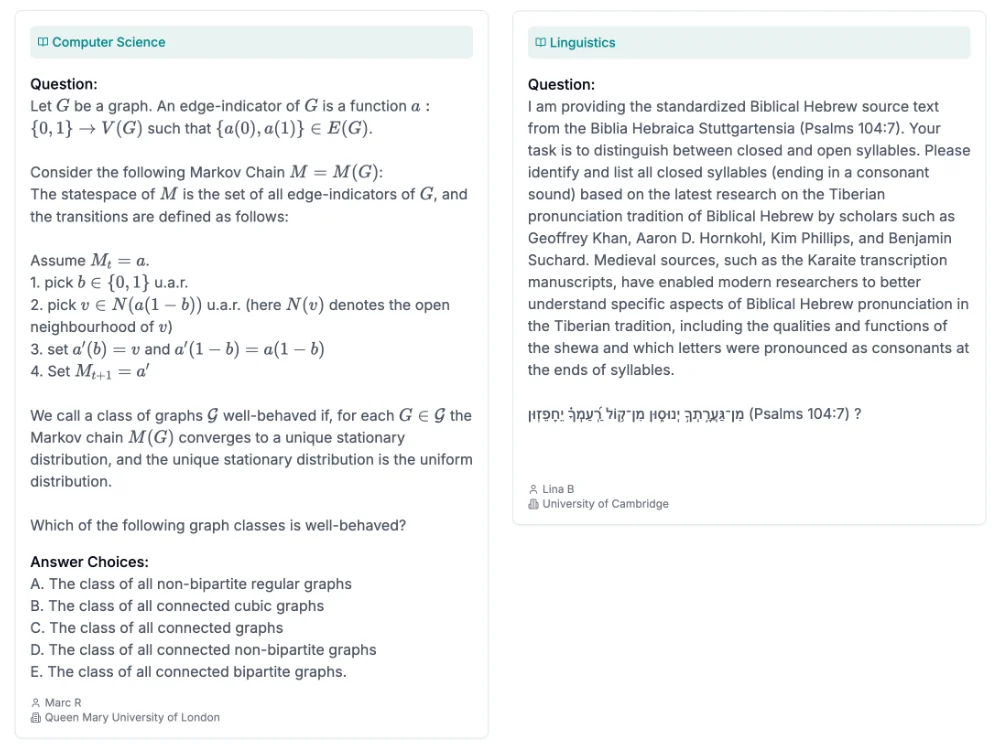
The key detail: the questions are closed but very hard. That inverts the usual trade-off. Normally we assume an automatically gradable question (easy to score) must be simplistic. HLE shows you can have both: objective grading and research-level difficulty.
HLE was posted on arXiv in early 2025, then formally published in Nature on January 28, 2026 (Nature, vol. 649). Project site: agi.safe.ai. A Nature publication for an AI benchmark is rare and signals that the work passed demanding scientific peer review.
How You Build a Test That Resists
The design trick fits in one sentence: keep only the questions the best models get wrong.
The process resembles GPQA's, pushed further:
- Experts propose hard questions in their field, each with an unambiguous reference answer.
- Every candidate question is run against the frontier models of the day. If the models solve it easily, it is discarded: it doesn't discriminate, it's too easy.
- The team checks it can't be found by a simple web search and isn't present verbatim in training data (resistance to contamination).
- They confirm it has a single verifiable correct answer.
The result is a test calibrated to stay at the top of the difficulty range: by construction, on release, existing models fail most of the questions. The opposite of a saturated benchmark.
People often conflate "short, verifiable answer" with "easy question." HLE breaks that intuition. A question can have a single integer as its answer… and still take a specialist hours of work to reach it. The answer is closed; the path to it is not.
Where Do Models Stand?
At the Nature publication (early 2026), even the best frontier models stayed well below 40%. The orders of magnitude cited at that date:
| Model (at publication) | Indicative HLE score |
|---|---|
| Gemini 3 Pro | ~38% |
| GPT-5 | ~25% |
| Grok 4 | ~25% |
These scores are orders of magnitude at the publication date, not a definitive leaderboard. Models move fast, evaluation conditions (prompt, tools allowed, exact model version) shift the numbers by several points, and new versions ship constantly. Read them as "where the frontier was in early 2026," not "the current ranking."
The point isn't the exact figure but the gap: where MMLU and GPQA are already near the ceiling, HLE leaves a huge margin between current performance and 100%. That space is precisely what makes the test useful: there is resolution, so room to distinguish models and track progress for years.
What HLE Brings (and What It Doesn't Say)
What It Brings
- Headroom. As long as scores sit at 25–38%, the test discriminates. You can rank models and follow their progress.
- Broad coverage. More than 100 disciplines, versus 3 for GPQA. It tests the breadth of expertise, not just physics-chemistry-biology.
- Objective grading. Closed, verifiable answers: no subjective human judge, so reproducible and hard to "inflate."
- Built-in contamination resistance from the design stage (anti-leak, anti-web-search filtering).
Its Limits
This is where a little caution pays off. A high HLE score does not mean a model is competent in the real world.
- Closed academic questions ≠ real tasks. HLE poses exam puzzles. Real work is rarely a multiple choice: you hold a twenty-message conversation, follow conflicting instructions, wield tools, admit uncertainty. That's the domain of agentic benchmarks (like SWE-bench or GAIA), which HLE doesn't cover.
- Selection vs. formulation. Many questions test the ability to find the right answer, not to build open-ended reasoning, write a proof, or defend a nuanced judgment.
- Not a measure of usefulness. A model can climb on HLE and remain unreliable, slow, or expensive in real use. The score ignores latency, cost, and hallucinations in free-form conversation.
- HLE will eventually saturate too. It's the cycle of every benchmark: hard at creation, caught up within 12–24 months. HLE pushes the deadline back; it doesn't abolish it.
Going from 25% to 50% on HLE is real, measurable progress. But it doesn't mean a model "understands science" or that it's ready for a critical professional task. HLE measures one precise thing (answering closed expert questions correctly) and nothing more. As with any benchmark: a single number never captures a model's real quality.
Its Place in the Benchmark Ecosystem
You can read HLE as the next step in a long race:
- MMLU (2020): broad but now saturated (~90%).
- GPQA (2023): "Google-proof," doctoral-level, but now caught up (>80% for reasoning models).
- HLE (2025–2026): harder still, far broader, and calibrated to stay hard (sub-40% at release).
And it shares the limits of the whole family of closed-question tests, detailed on the benchmark-limits page: contamination, score gaming, and above all the gap between score and real-world usefulness. HLE brilliantly solves saturation and contamination, but not the benchmark-to-reality gap, which remains the real question for anyone judging what a model can actually do.
Key Takeaways
- HLE answers saturation. When MMLU, GSM8K, or HellaSwag plateau at 90–96%, they no longer distinguish models. HLE restores a test with huge headroom before 100%.
- ~2,500 expert questions, 100+ disciplines, closed verifiable answers. Built by the Center for AI Safety and Scale AI; published in Nature on January 28, 2026 (arXiv 2501.14249, site agi.safe.ai).
- Hard by construction. Only the questions frontier models got wrong were kept, hence the low scores at release.
- At publication, the frontier stayed under 40%: Gemini 3 Pro ~38%, GPT-5 ~25%, Grok 4 ~25%. These are orders of magnitude at that date, not a frozen ranking.
- Closed answer doesn't mean simple question. A one-word verifiable answer can demand research-level reasoning.
- Limits to keep in mind. HLE measures closed academic puzzles, not real or agentic tasks; it ignores reliability, cost, and latency; and it too will eventually saturate.