The Problem with Automatic Benchmarks
Classic benchmarks (MMLU, HumanEval, GPQA) test narrow and measurable things. One question, one correct answer. No nuance. A model that answers "B" on an MCQ gets a point. A model that answers "A" gets zero.
But in real life, users don't ask MCQs. They ask open-ended, ambiguous, creative things. "Explain photosynthesis to an 8-year-old." "Help me write a follow-up email to a client." "Write me a poem about rain." For these questions, ten different answers can be good. And automatic benchmarks can't evaluate that.
LMArena (formerly Chatbot Arena, created by LMSYS at UC Berkeley) solves this problem in the most direct way possible: ask humans to vote.
You ask a question. Two anonymous models respond in parallel, side by side. You vote for the best answer (or declare a tie). Your vote updates an ELO score for each model. Repeat this 2 million times with thousands of different users, and you get the most robust and honest LLM ranking.
The ELO System: Borrowed from Chess
ELO is a ranking system invented by Arpad Elo for chess tournaments. Each model has a numerical score (typically between 800 and 1400 in LMArena). After each "match" (a human vote), the scores adjust:
- Win against a higher-ranked model: you gain a lot of points (~50). Makes sense, it's a surprise.
- Win against a lower-ranked model: you gain few points (~5). Expected.
- Loss against a lower-ranked model: you lose a lot of points. Bad sign.
The beauty of the system: scores naturally converge toward equilibrium. With enough matches, each model finds its position. Fluctuations disappear. 2 million votes is more than enough for a robust ranking.
Practical interpretation: a 50-point ELO difference corresponds to about a 57% win probability. 100 points? ~65%. It's linear and intuitive.
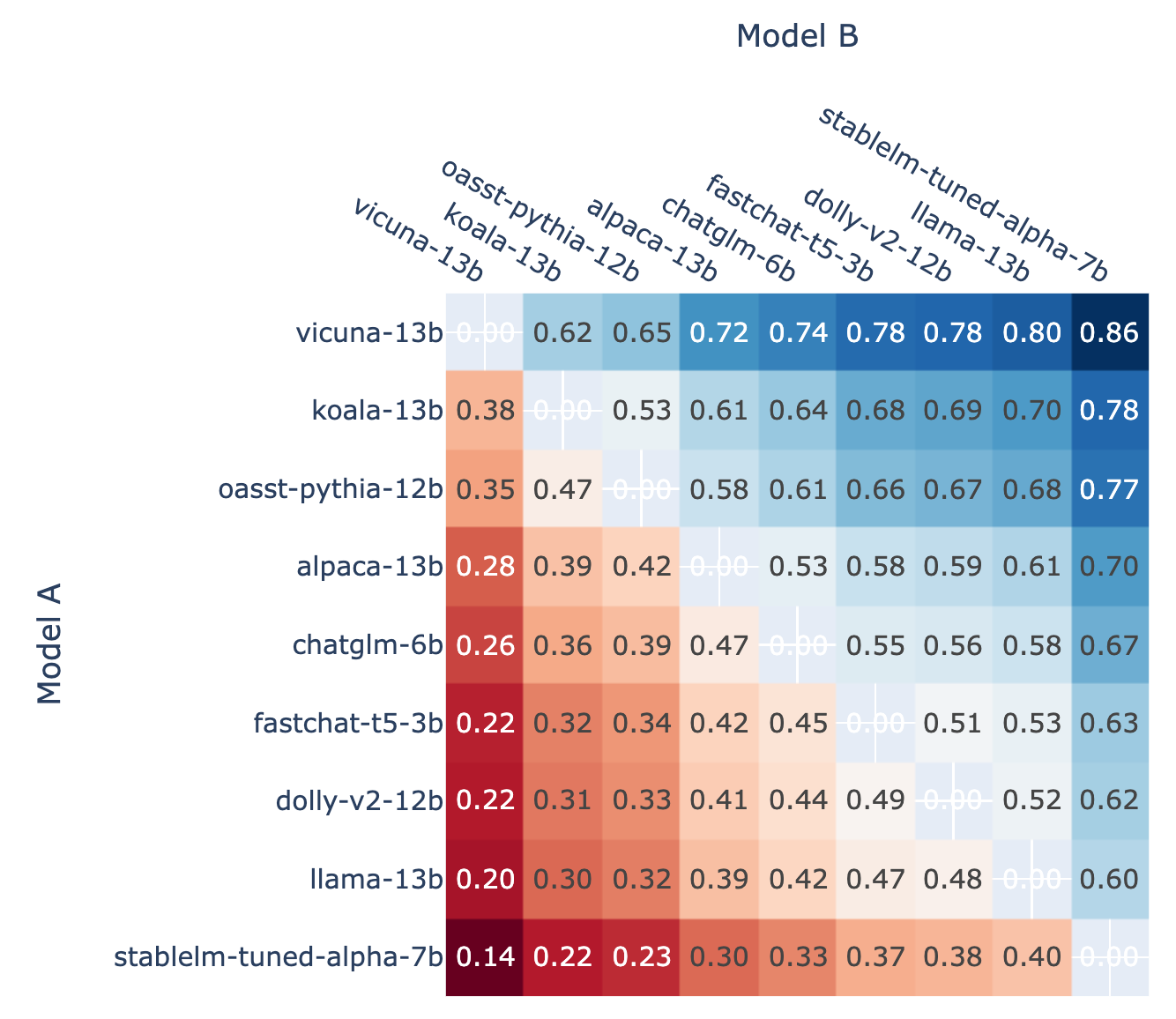
You don't know who you're evaluating. ChatGPT vs LLaMA vs Claude? The identities are hidden. This eliminates brand bias. A little-known open-source model can beat a famous model if its answers are better. And the identities are only revealed after the vote, for transparency.
The Rankings: Who Dominates (March 2026)
The ranking constantly evolves, but the trends are clear:
- GPT-5.4 (March 2026) dominates with its natively integrated reasoning (legacy of the o1/o3 lineage).
- Claude Opus 4.6 and Claude Sonnet 4.6 are very competitive, especially on code and analysis tasks.
- Gemini 3.1 Pro dominates on academic benchmarks (13/16 benchmarks).
- Open-source models (Llama 4, DeepSeek) are progressing rapidly and approaching the top.
LMArena also offers specialized rankings by domain, which adds a lot of granularity:
- Coding: programming tasks (specialized code models shine here)
- Math: mathematical reasoning
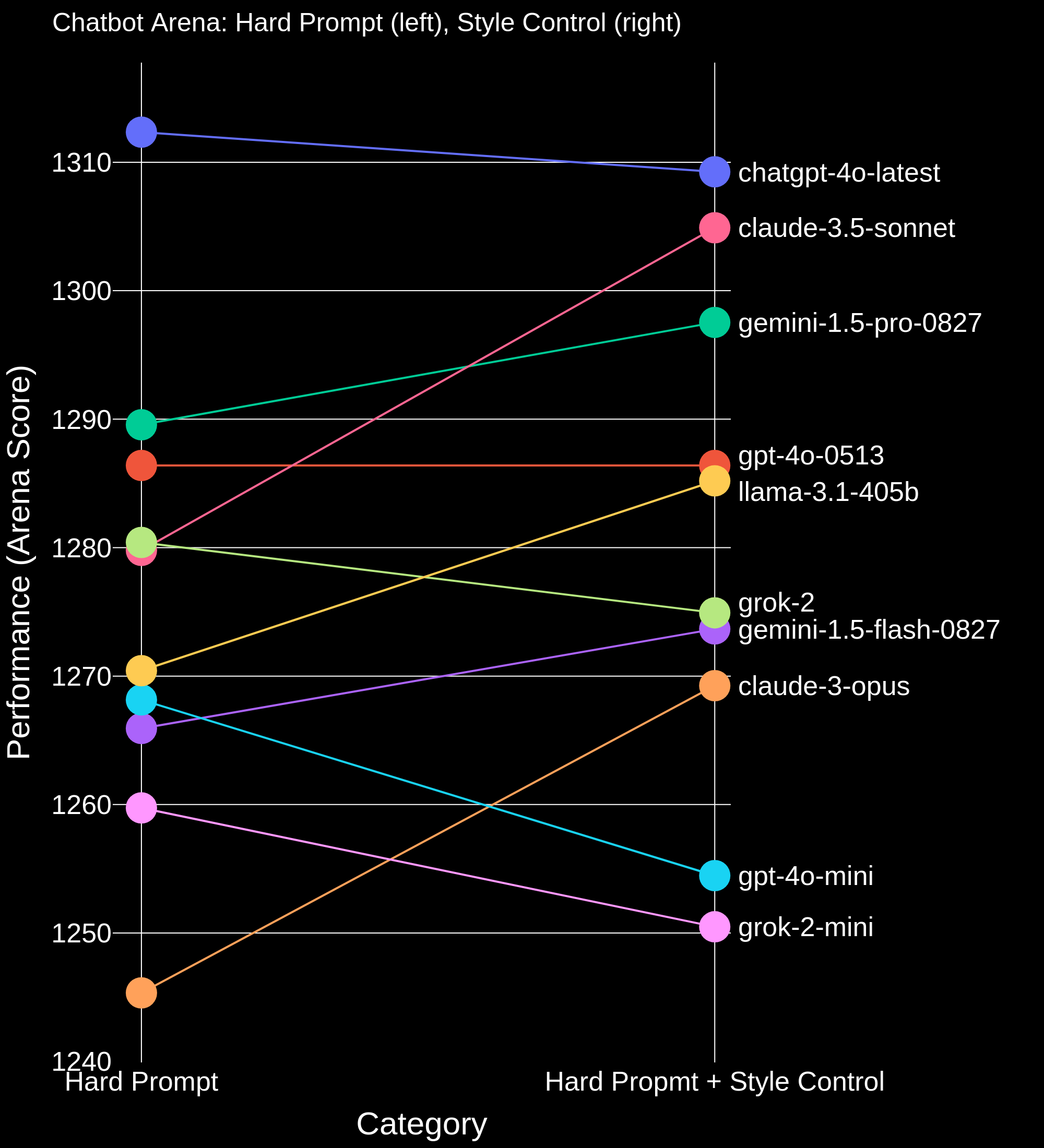
- Hard Prompts: difficult and complex questions
- Instruction Following: precision in following detailed instructions
- Style Control: ranking adjusted to eliminate style biases (length, formatting)
- Vision Arena: comparison of multimodal models (image + text)
Methodology: How It Works in Practice
The interface: the site chat.lmsys.org (now lmarena.ai). You write your question. Two answers appear side by side, labeled "Model A" and "Model B." You vote: A is better, B is better, tie, or "both are bad."
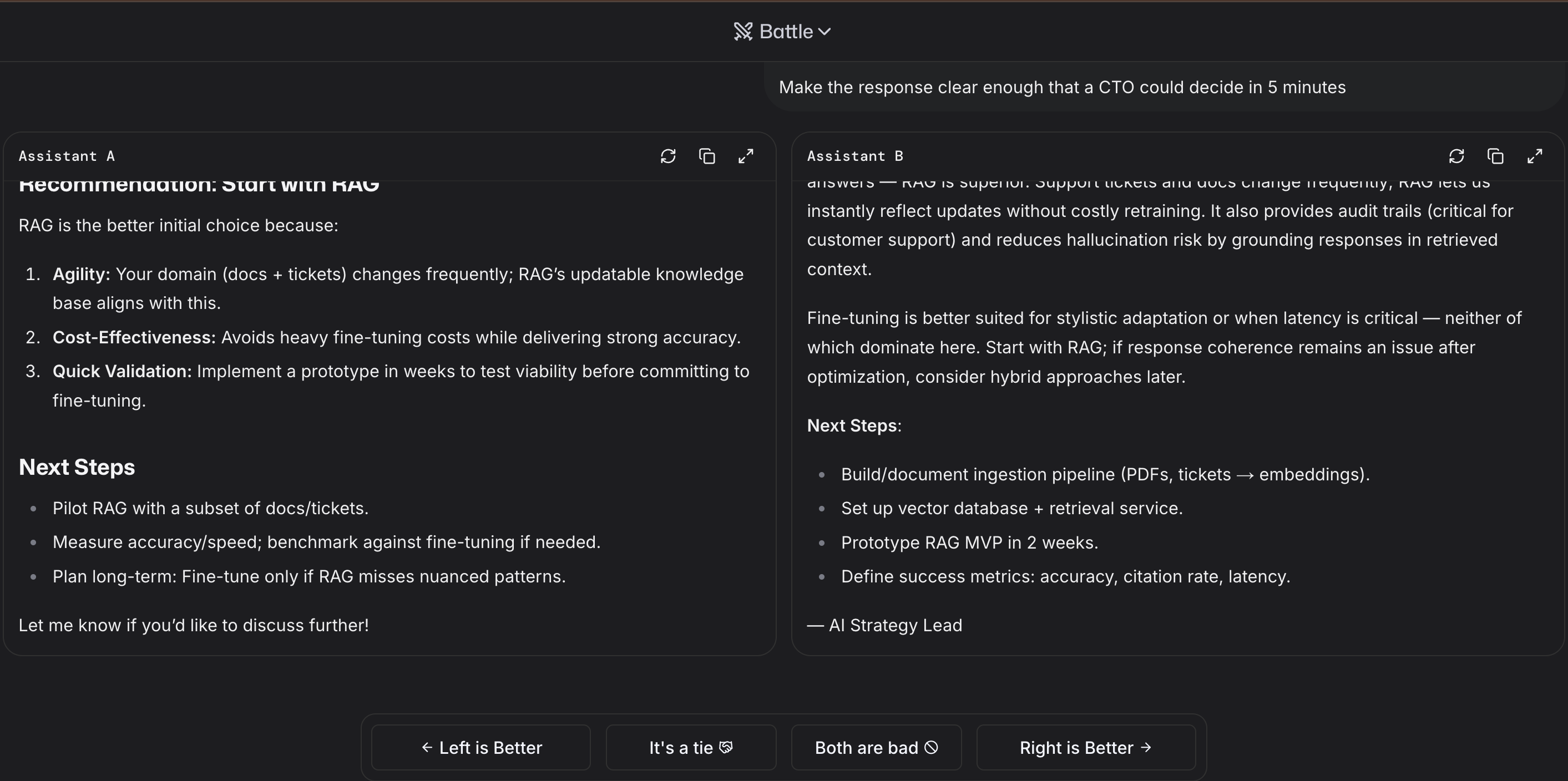
The identities are revealed after the vote. You discover whether you preferred Claude Sonnet 4.6 over GPT-5.4, or Llama 4 over Gemini 3.1 Pro. It's often surprising.
Quality control is essential for reliability:
- Spam and automated voting (bots) detection
- Question diversity (no over-representation of one domain)
- Minimum number of votes before a model appears in the ranking
- Confidence intervals published (you can see the margin of error)
- Regular model rotation to ensure fresh comparisons
The ELO score correlates moderately with MMLU, HumanEval, and other automatic benchmarks. But it captures additional dimensions that benchmarks ignore: style (clarity, formatting, tone), nuance (nuanced answers vs. overly direct ones), and perceived usefulness (does the answer actually help me?). A model can excel on MMLU but rank poorly on Arena if it responds in a dry, poorly formatted, or practically irrelevant way.
The Biases That Persist
Even with 2 million votes, LMArena isn't perfect:
Length bias: users tend to prefer longer answers, even if they're not more correct or useful. A verbose model can win votes simply because its answer "looks more complete." The Style Control ranking attempts to correct this bias by normalizing for length and formatting.
Population bias: LMArena users don't represent all use cases. Questions are biased toward conversational tasks (free chat, general questions). Enterprise tasks (document analysis, structured data processing), specialized tasks (medical, legal), and complex technical tasks are underrepresented.
Manipulation attempts: coordinated votes by communities, use of bots to favor a model. LMSYS has countermeasures (anomaly detection, IP filtering), but it's a continuous cat-and-mouse game.
First-glance bias: voters often read quickly and judge based on the answer's appearance (structure, bullet points, formatting) rather than the accuracy of the content. A model that formats well but says nonsense can beat a correct but poorly presented model.
What LMArena Really Measures (and What It Doesn't)
What it measures well: perceived conversational quality, user satisfaction for open-ended tasks, human preference between models.
What it doesn't measure: production reliability, long document analysis capability, complex structured reasoning, performance on specific enterprise tasks, response speed, cost per query.
LMArena is the best tool for evaluating conversational assistants. But if you need a model for intensive programming, scientific analysis, enterprise document processing, or high-reliability tasks, also look at specialized benchmarks: HumanEval, GPQA, SWE-bench, AIME. The Arena ranking alone only tells part of the story.
Impact on the Industry
LMArena has become the reference for LLM comparisons in the industry. Companies cite their Arena position in press releases. New model launches are judged partly on their Arena performance. Investors look at the rankings.
It's the evaluation closest to real user satisfaction, because it's literally based on real user satisfaction. In a world where automatic benchmarks saturate and can be manipulated, it's a precious anchor.